Soulnote A-1 ver.2 Integrated Amplifier
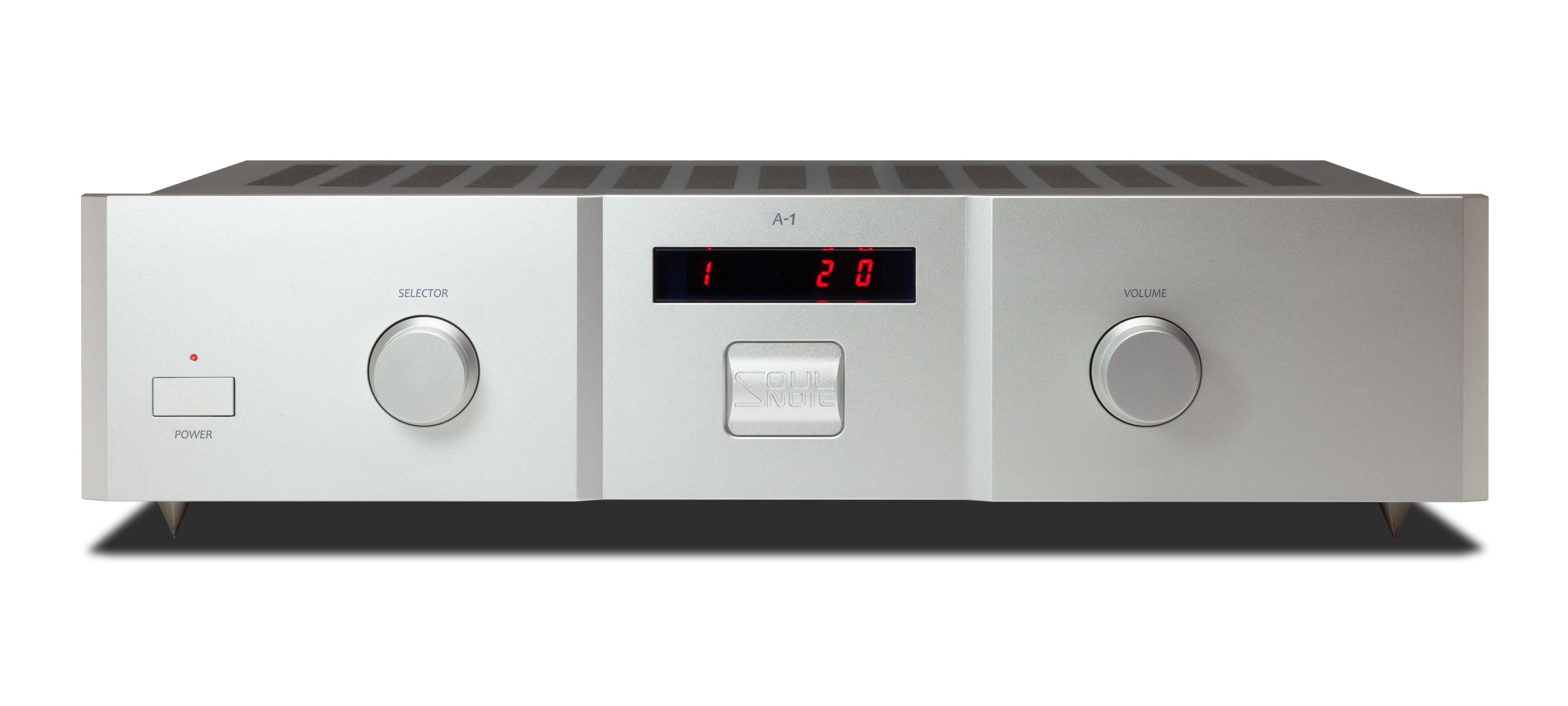
The Soulnote A-1 v2 is a fully discrete, no-negative-feedback integrated amplifier delivering 40 watts per channel into 8 ohms, and 80 watts per channel into 4 ohms. It is the sole integrated amplifier in Soulnote's Series 1 and sits between the entry-level A-0 ver.2 and the higher-output A-2 ver.2 in the brand's amplifier hierarchy. The A-1 ver.2 carries forward the same foundational circuit philosophy as the flagship A-3 while introducing a dedicated high-speed discrete power supply, a relay-switched balanced attenuator for volume control, and a symmetrical chassis designed to manage resonance rather than suppress it.
Circuit Architecture
Fully Discrete, No-Negative-Feedback Design
Like all Soulnote amplifiers, the A-1 v2 uses a fully discrete circuit with no negative feedback anywhere in the signal path. Negative feedback is a technique used in the majority of audio amplifiers to reduce distortion by feeding a portion of the output signal back to the input to correct errors. Soulnote's chief designer Hideki Kato has stated that while negative feedback can improve static measured performance, he found through his design work that deeper application of it progressively reduces the musical vitality of the signal. The A-1 ver.2 instead relies on a direct signal path: a selector and volume control connected to a power amplifier stage, with no feedback loop and, per Soulnote, no circuit elements that could limit bandwidth or degrade signal freshness.
The circuit also employs ultra-high-purity resistors selected to maintain constant impedance up to high frequencies, eliminating capacitive resonance within the signal path. This is described by Soulnote as enabling both signal integrity and stability across the full bandwidth without requiring bandwidth-limiting measures.
Single Push-Pull Output Stage with TO-3P Transistors
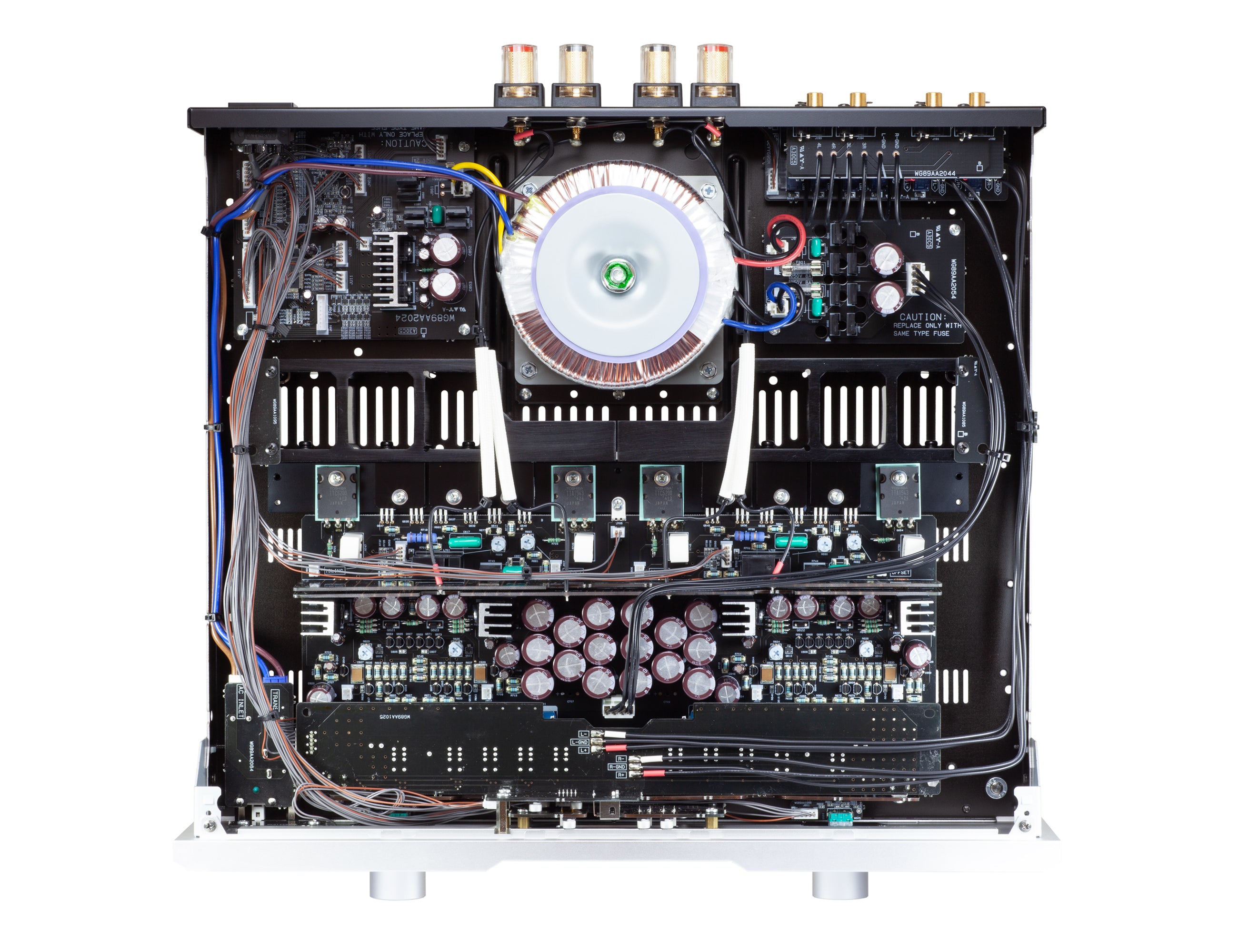
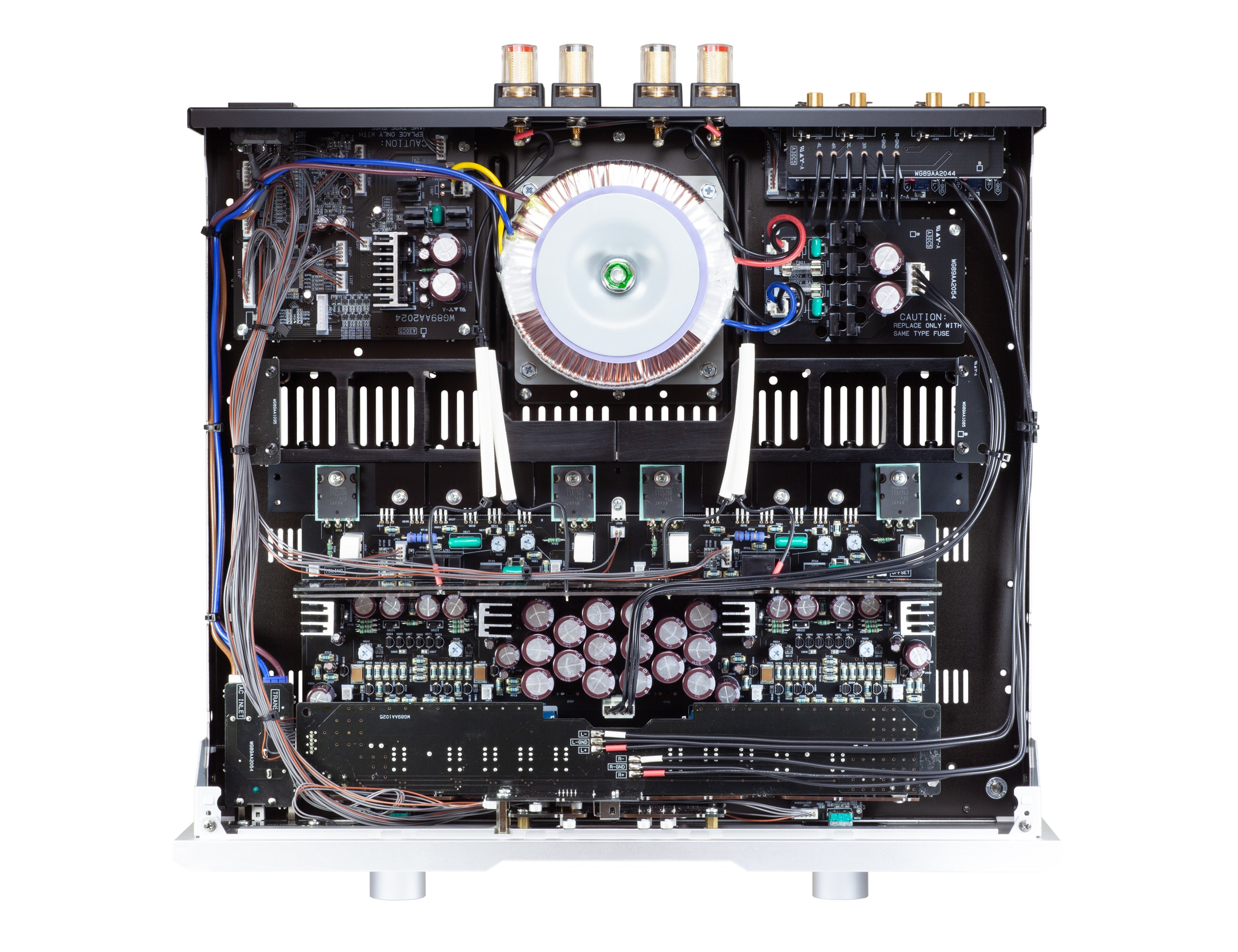
The output stage of the A-1 ver.2 uses TO-3P package transistors in a single push-pull configuration. The TO-3P is a larger, higher-power transistor package than the TO-220 found in the A-0 ver.2, capable of handling the greater current demands of the A-1 ver.2's 40W and 80W output ratings. These transistors were selected for their high output capability and low collector-base capacitance, which contributes to the amplifier's measured frequency response of 2Hz to 200kHz at plus or minus 1dB. Soulnote states that this output stage design eliminates tonal blurring while delivering strong drive capability.
Four-Stage Darlington Configuration
The output stage employs a four-stage Darlington transistor configuration, the same arrangement used in the A-2 ver.2 and the A-0 ver.2. Darlington configurations use cascaded transistor pairs to achieve high current gain, and the four-stage implementation here is intended to ensure strong, controlled current delivery across a wide dynamic range. Soulnote applies this configuration at the Series 1 level to maintain the same fundamental drive architecture found throughout the lineup.
Newly Developed Bias Circuit
The A-1 ver.2 introduces a newly developed bias circuit in place of the LED-based bias circuit used in the original A-1. The bias circuit determines the quiescent operating point of the output stage, establishing the small standing current that flows through the output transistors in the absence of a music signal. A well-designed bias circuit reduces background noise and thermal drift. Soulnote states that the new bias circuit in the ver.2 delivers a dramatic improvement in signal-to-noise ratio, which is specified at 110dB using IHF A-weighting.
Power Supply
The A-1 ver.2 is equipped with what Soulnote describes as a high-speed discrete no-negative-feedback power supply, built around a newly developed non-impregnated toroidal power transformer. The term non-impregnated refers to the transformer's winding not being filled with a resin or varnish compound, a treatment that is common in standard transformers to improve mechanical stability. Soulnote's position is that impregnation adds mass and alters the transformer's vibrational behavior in ways that can affect sound quality.
The secondary output voltage of the transformer has been deliberately limited below the level that would be required for maximum output power. According to Soulnote, this tradeoff reduces peak output but increases the transformer's current delivery capability. The stated goal is improved drive performance with low-impedance loudspeakers, which place greater current demands on the power supply than high-impedance loads.
Volume Control: Relay-Switched Balanced Attenuator
Volume adjustment in the A-1 ver.2 is handled by a relay-switched balanced attenuator, rather than a conventional potentiometer. In a standard potentiometer, the volume is set by the position of a wiper contact against a resistive element, which can introduce channel imbalance at low volumes, commonly called gang error, and can degrade signal quality. The relay attenuator approach replaces the potentiometer with a network of precision resistors that are switched in and out by relays to set the desired attenuation level in discrete steps.
Soulnote implements this in a balanced configuration, meaning the attenuation is applied symmetrically to both the positive and negative halves of the audio signal. This is relevant for both balanced and unbalanced sources, and is consistent with the circuit's no-feedback, fully discrete topology. The relay switching produces an audible click when the volume is adjusted, which is characteristic of relay attenuator designs. A remote control is included.
Mechanical Design
Direct Mechanical Grounding Construction
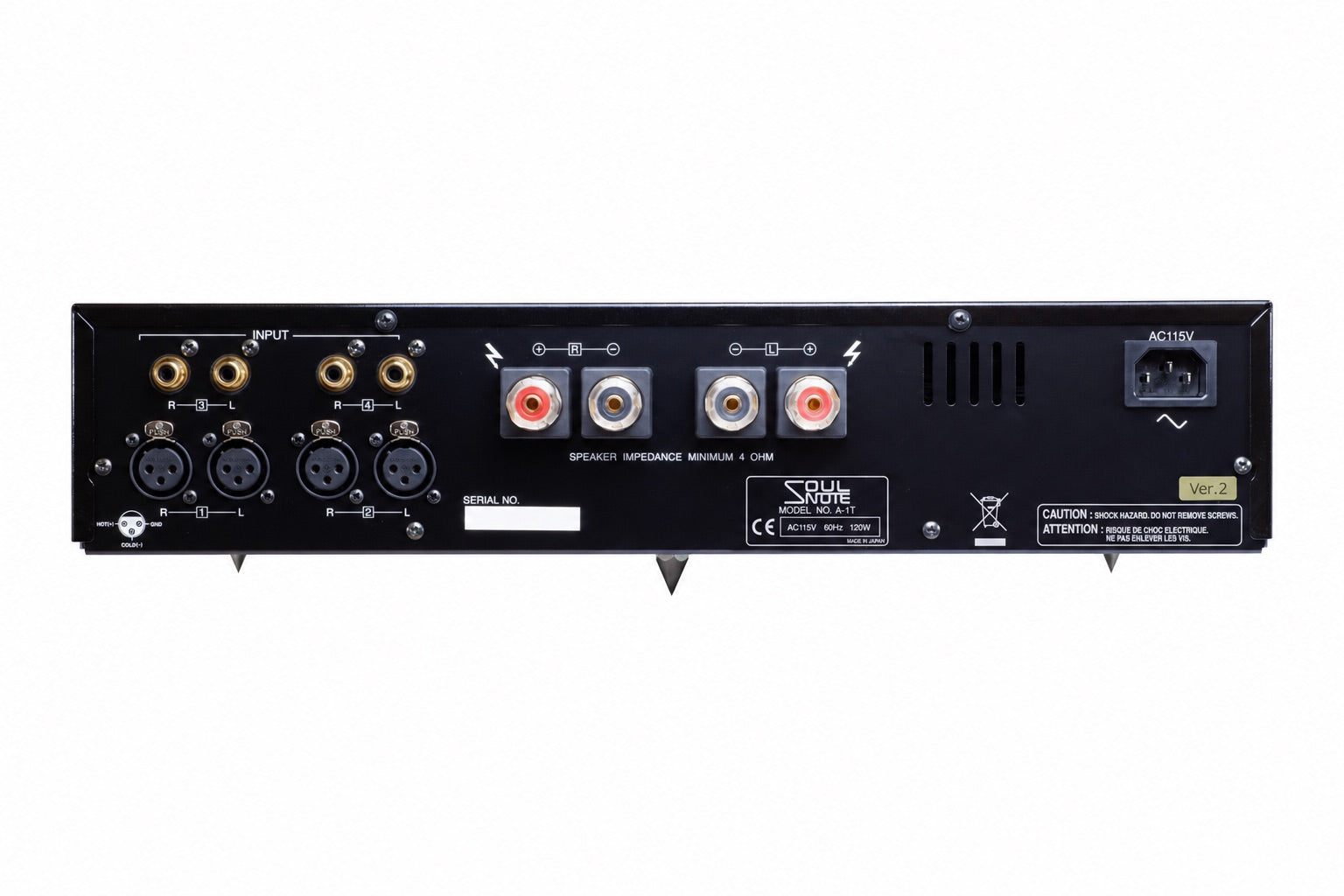
As with other Soulnote amplifiers, the A-1 ver.2 uses a three-point spike foot support system where one spike is mounted directly beneath the center of gravity of the power transformer. Transformer vibration is an inherent byproduct of AC operation. By placing a support point directly beneath the transformer, Soulnote's stated intent is to allow that vibration to conduct out of the chassis through the most direct mechanical path possible, rather than dispersing it through the chassis structure where it could affect sensitive circuit components. Soulnote describes this as enabling both liveliness of musical expression and high signal-to-noise performance simultaneously.
Symmetrical Chassis with Resonance Control
The chassis of the A-1 ver.2 uses a symmetrical construction designed to balance rigidity while managing the sharpness of resonance, quantified in engineering terms by the Q factor. Rather than maximizing chassis rigidity across the board, which can cause an amplifier chassis to store and release mechanical energy at specific frequencies, Soulnote's approach is to control how the chassis resonates so that its natural vibration behavior does not introduce coloration. The company states that this design avoids what it describes as the sense of sonic confinement that can accompany highly rigid chassis designs.
Connectivity
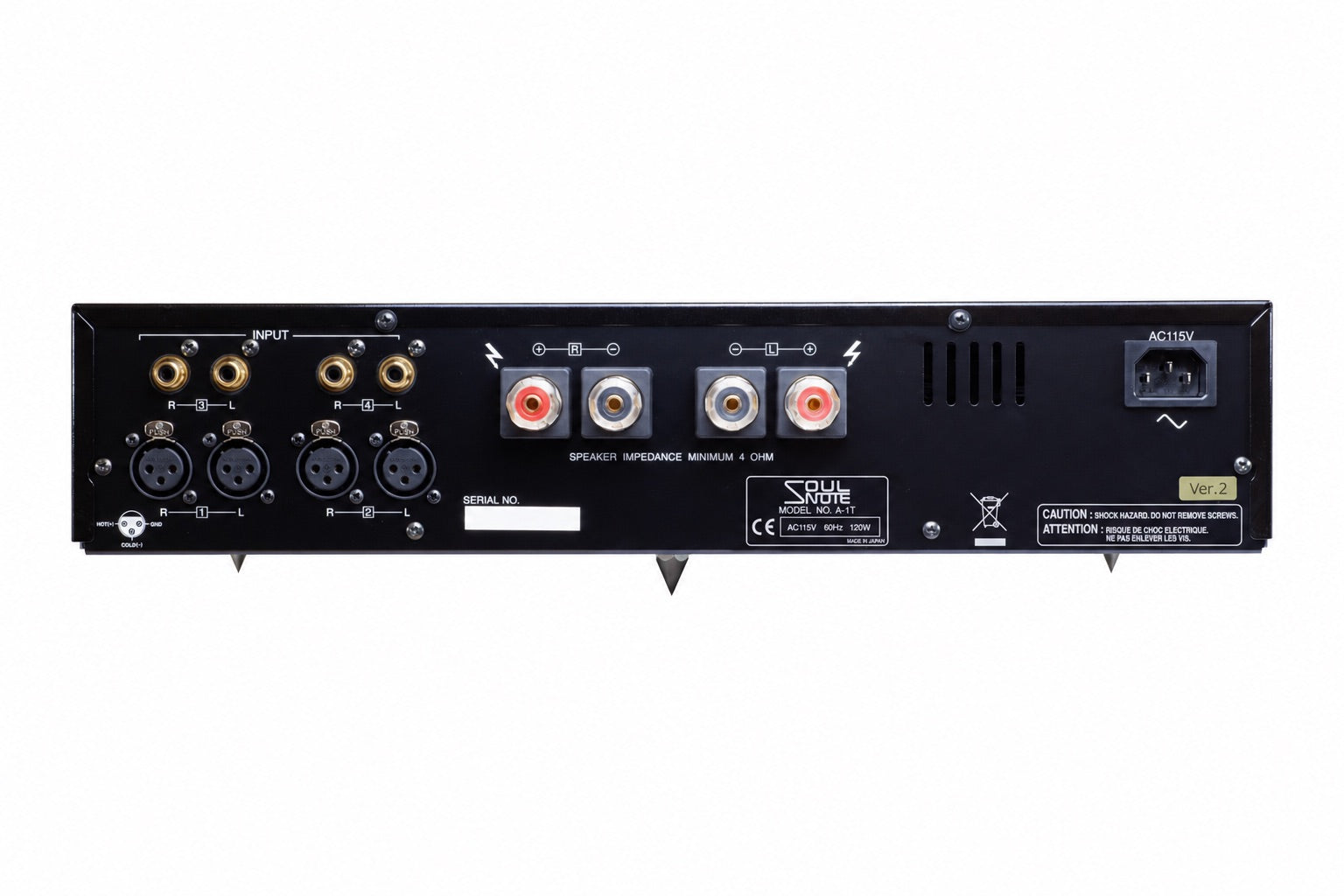
The A-1 ver.2 provides four line-level inputs: two balanced XLR inputs and two unbalanced RCA inputs. The addition of a second balanced XLR input is a specific improvement introduced in the ver.2 over the original A-1. Input sensitivity is 700mV for all inputs, with input impedance of 16k ohms for the balanced XLR inputs and 8k ohms for the unbalanced RCA inputs. There is no phono stage, no digital input, and no headphone output, consistent with Soulnote's design approach of keeping signal path components to a minimum. A remote control, spike feet, and power cable are included.
The A-1 ver.2 in the Soulnote Lineup
Soulnote's amplifier lineup is organized into four numbered series. The A-0 ver.2 in Series 0 delivers 10 watts per channel with a built-in headphone amplifier and pre-out. The A-1 ver.2 in Series 1 steps up to 40 watts per channel and 80 watts into 4 ohms, adds a dedicated power supply and a relay-switched balanced attenuator, and introduces balanced XLR connectivity. The A-2 ver.2 in Series 2 continues upward in output power and circuit sophistication, and the A-3 in Series 3 is the company's reference integrated amplifier. All four share the same no-negative-feedback, fully discrete circuit architecture. The A-1 ver.2 is the appropriate choice within the range for listeners who require more output power than the A-0 ver.2 can deliver, or who want balanced input connectivity and a relay-based volume control in a Series 1 package.
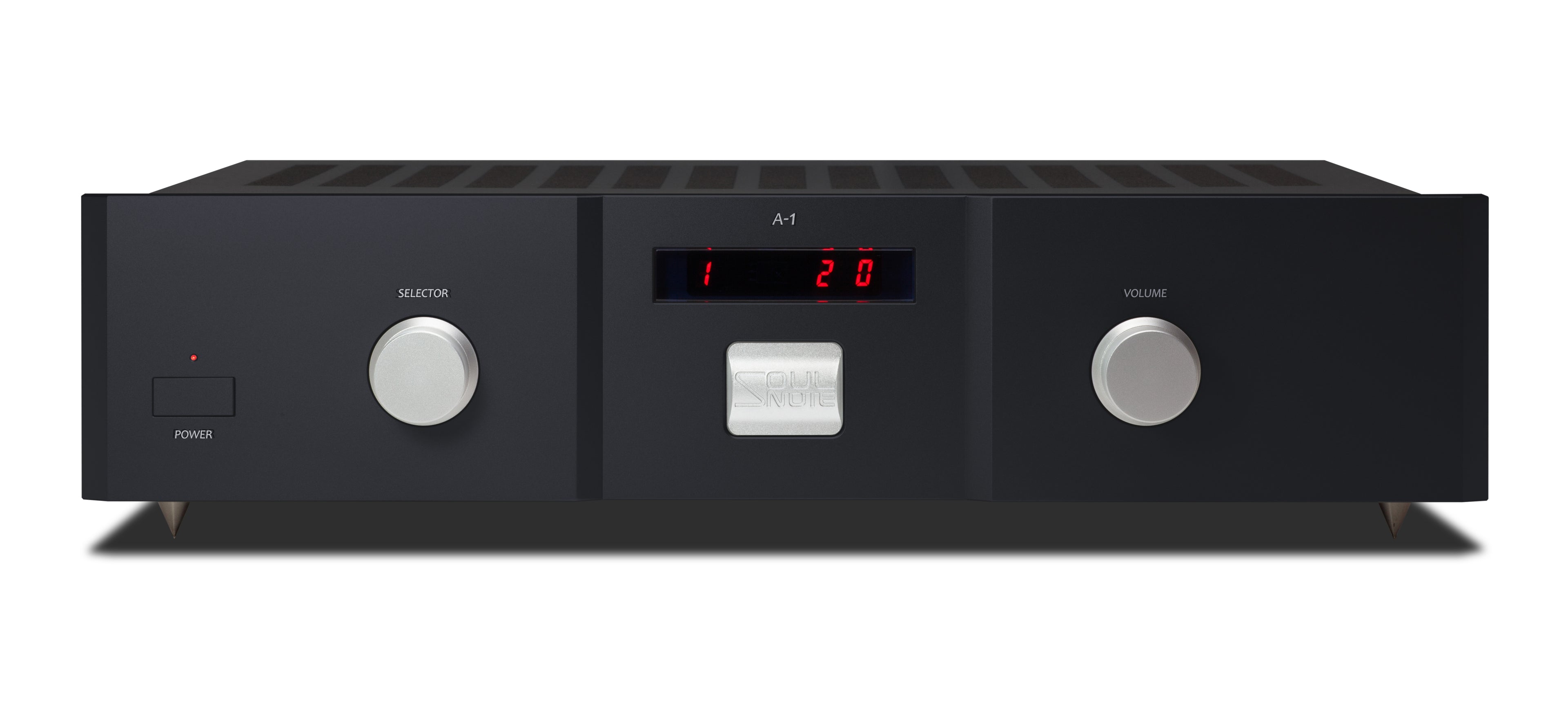
The Soulnote A-1 ver.2 is available in Premium Silver and Premium Black, is manufactured in Japan, and has dimensions of 430 x 109 x 418mm at a weight of 10.0kg.



 Pay $0 today
 Trial
Trial
 Pay
Pay