DS Audio TB-100
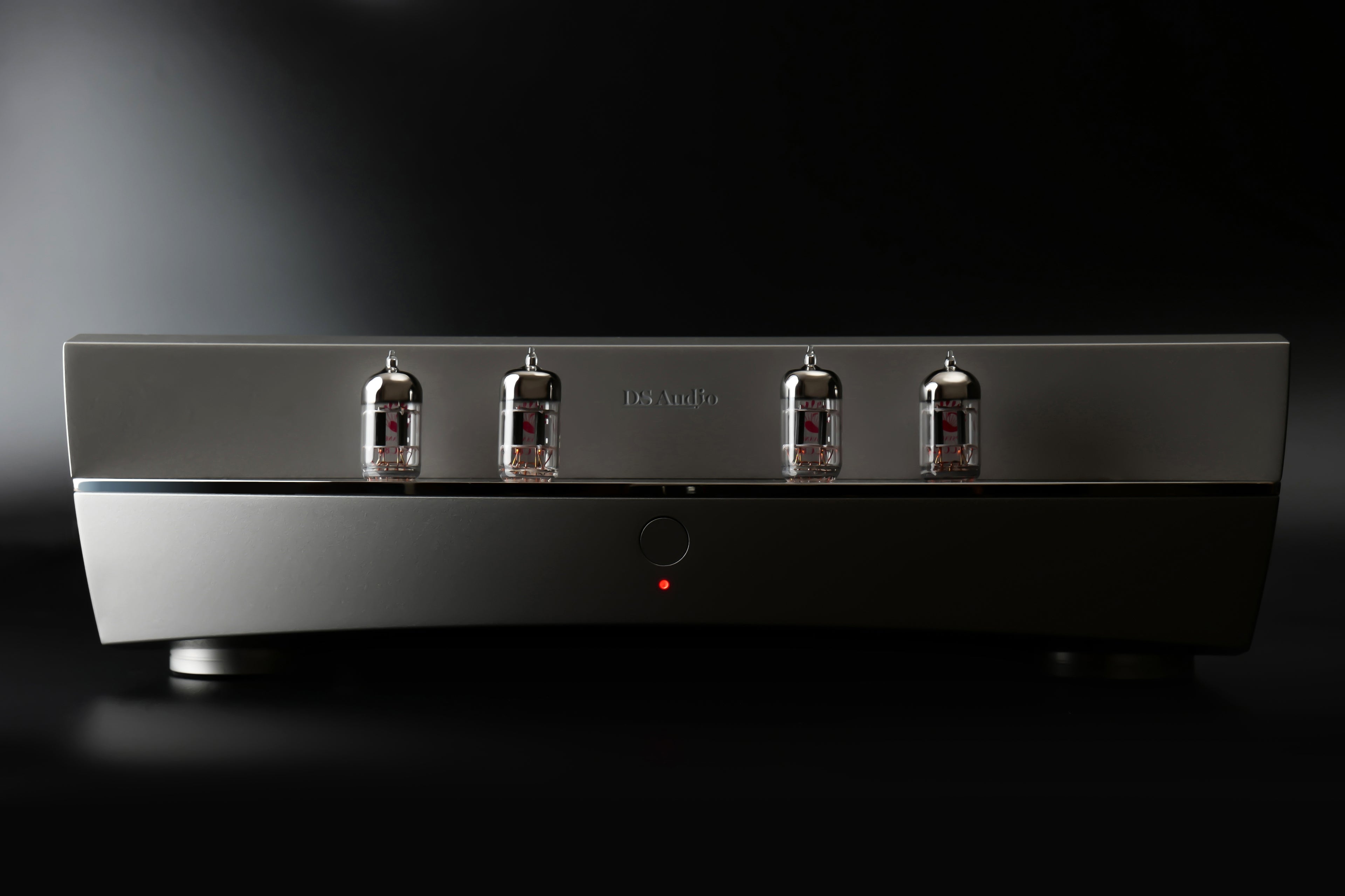
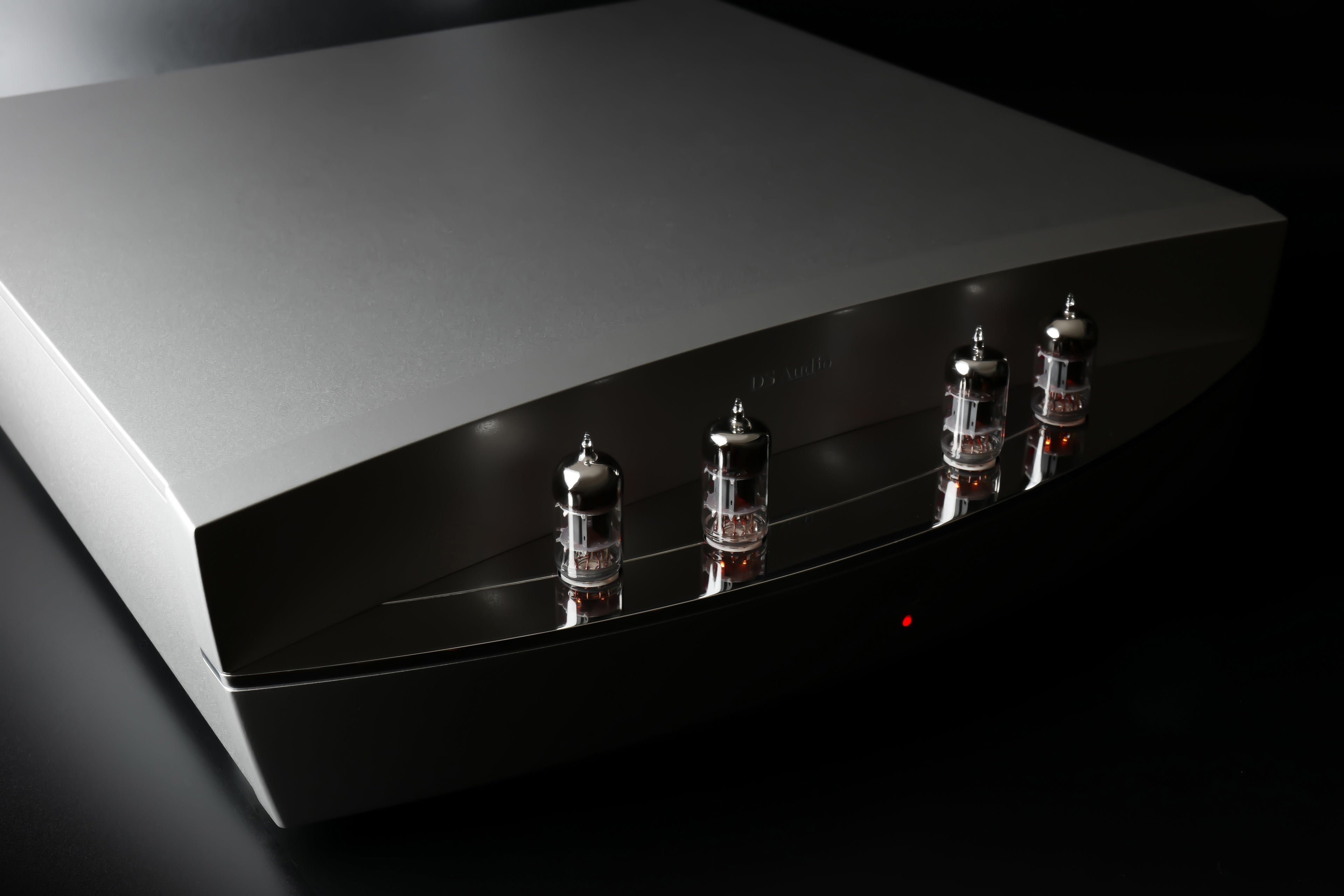
The DS Audio TB-100 is a pure vacuum tube phono equalizer designed exclusively for DS Audio optical cartridges. The first all-tube energizer and equalizer from DS Audio, it departs from the company's established solid-state approach by passing the entire signal -- from the wideband transformer input through equalization and amplification -- through vacuum tube circuitry. The TB-100 is compatible with the complete range of DS Audio optical cartridges and cannot be used with MM or MC cartridges.
Pure Tube Design
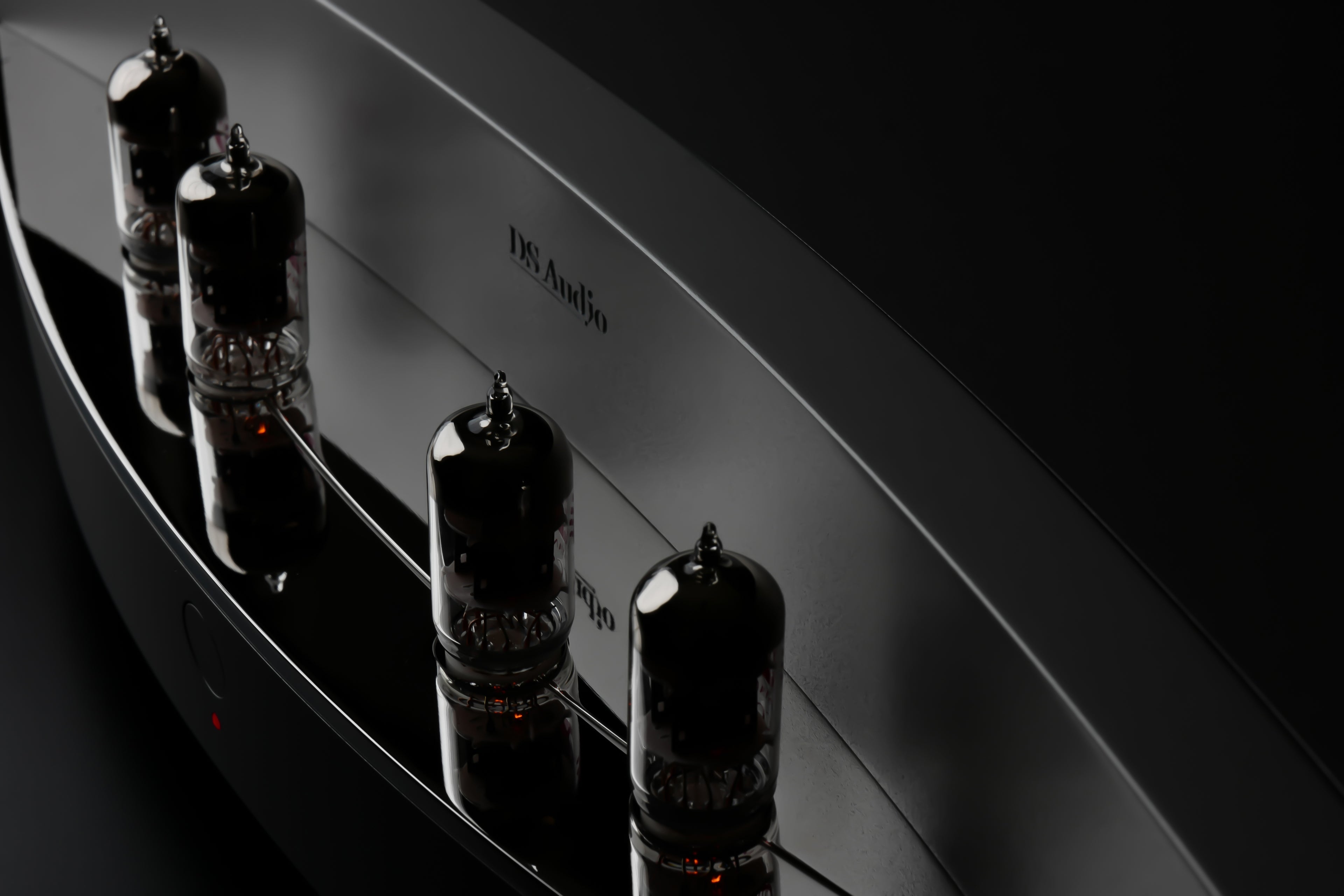
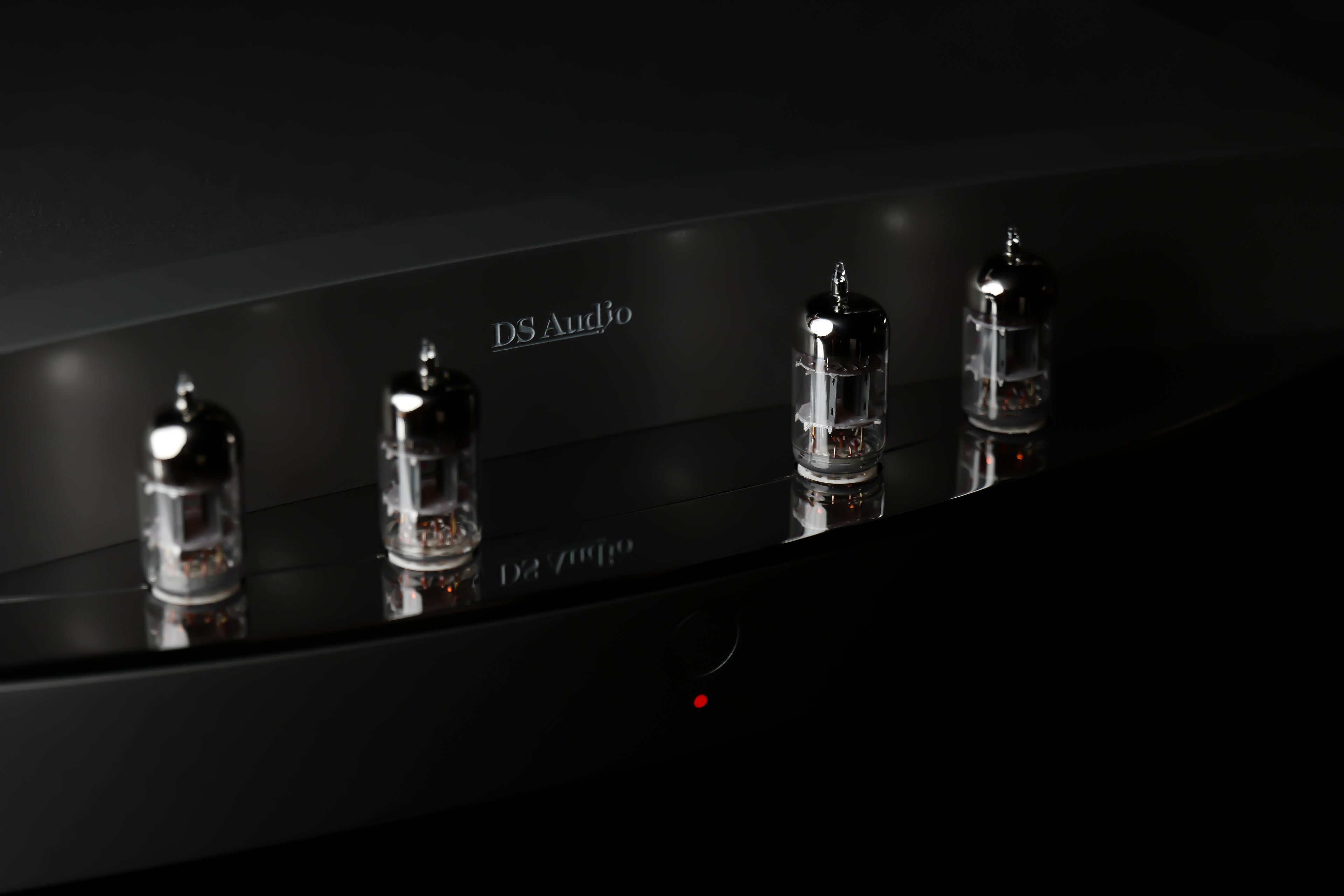
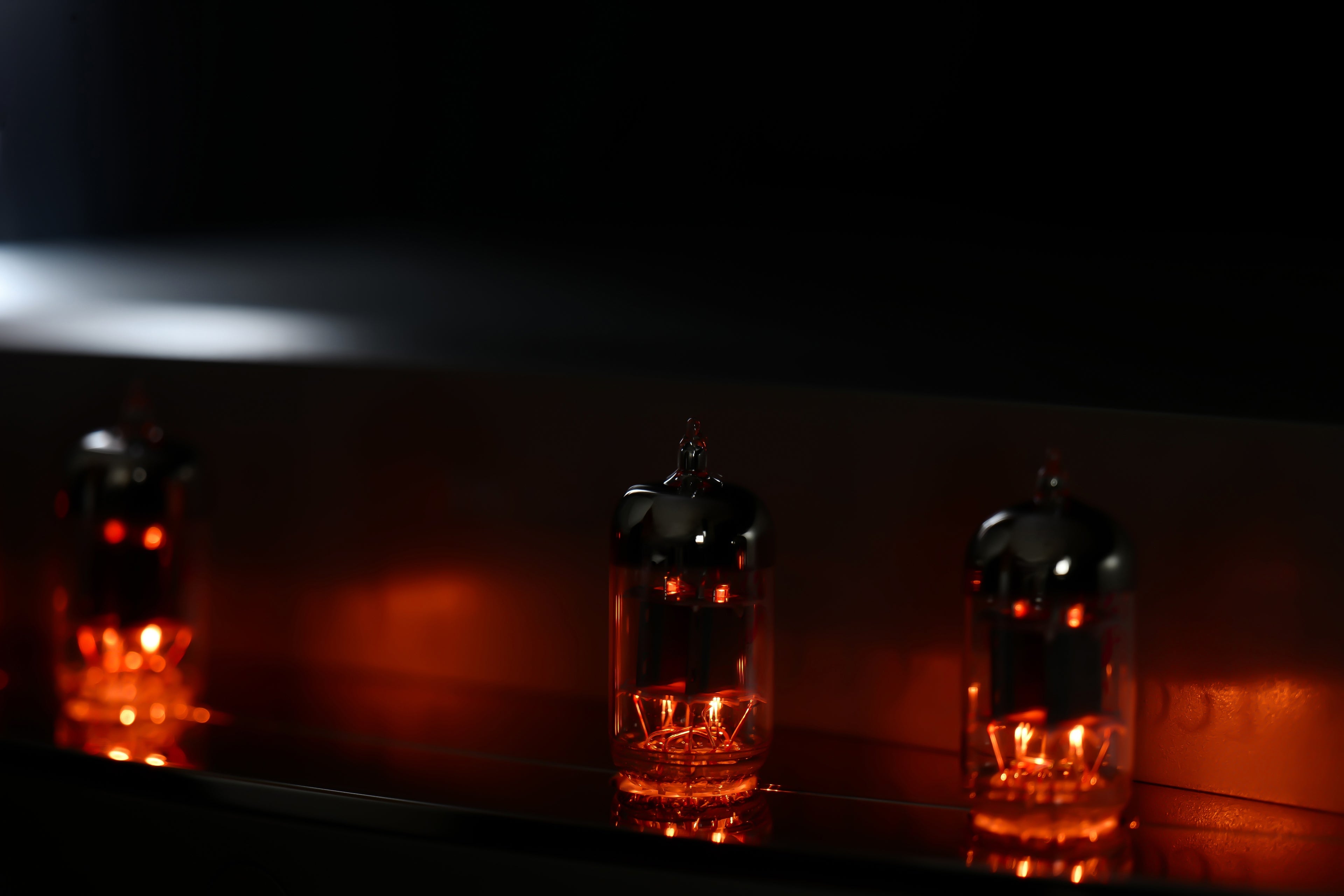
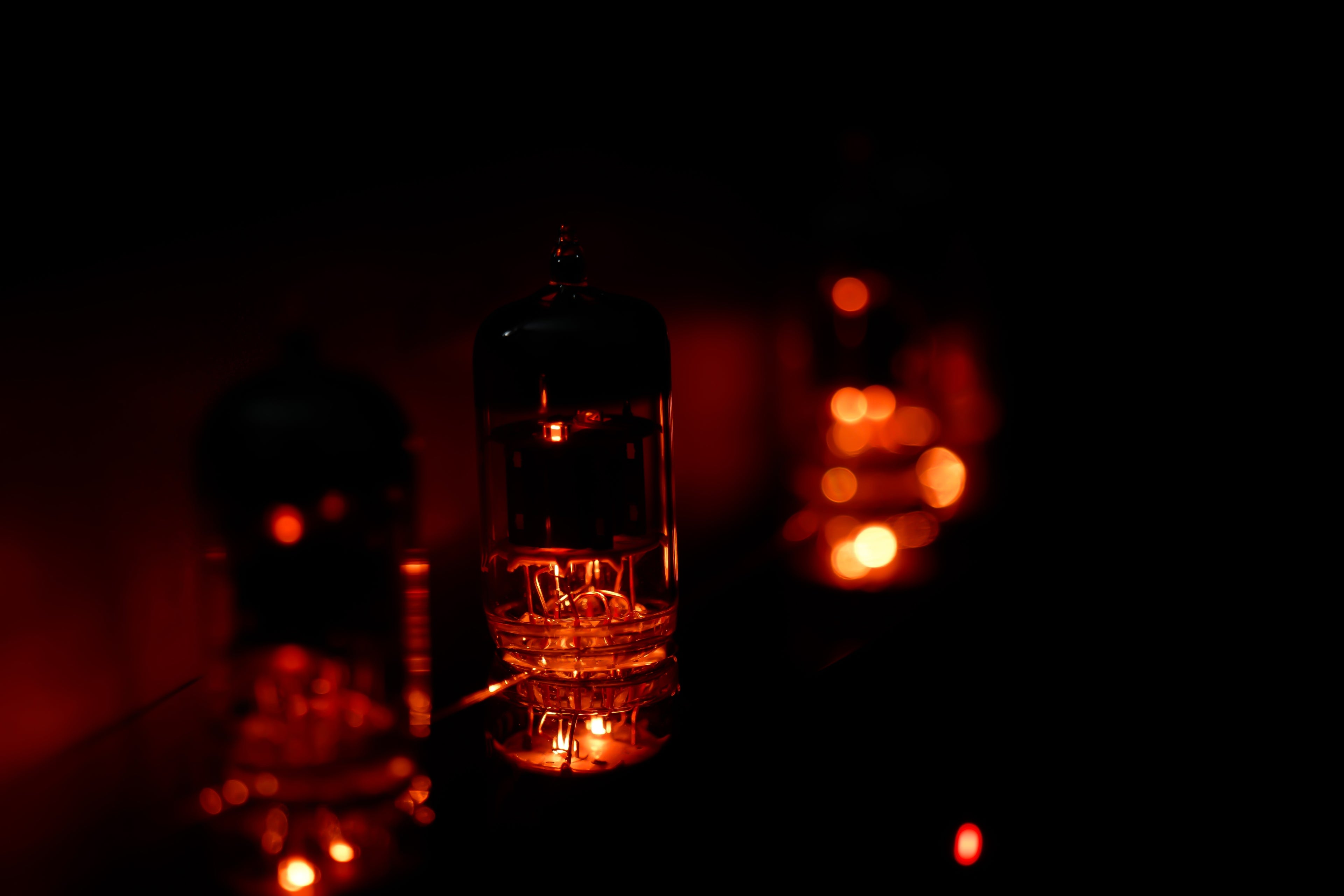
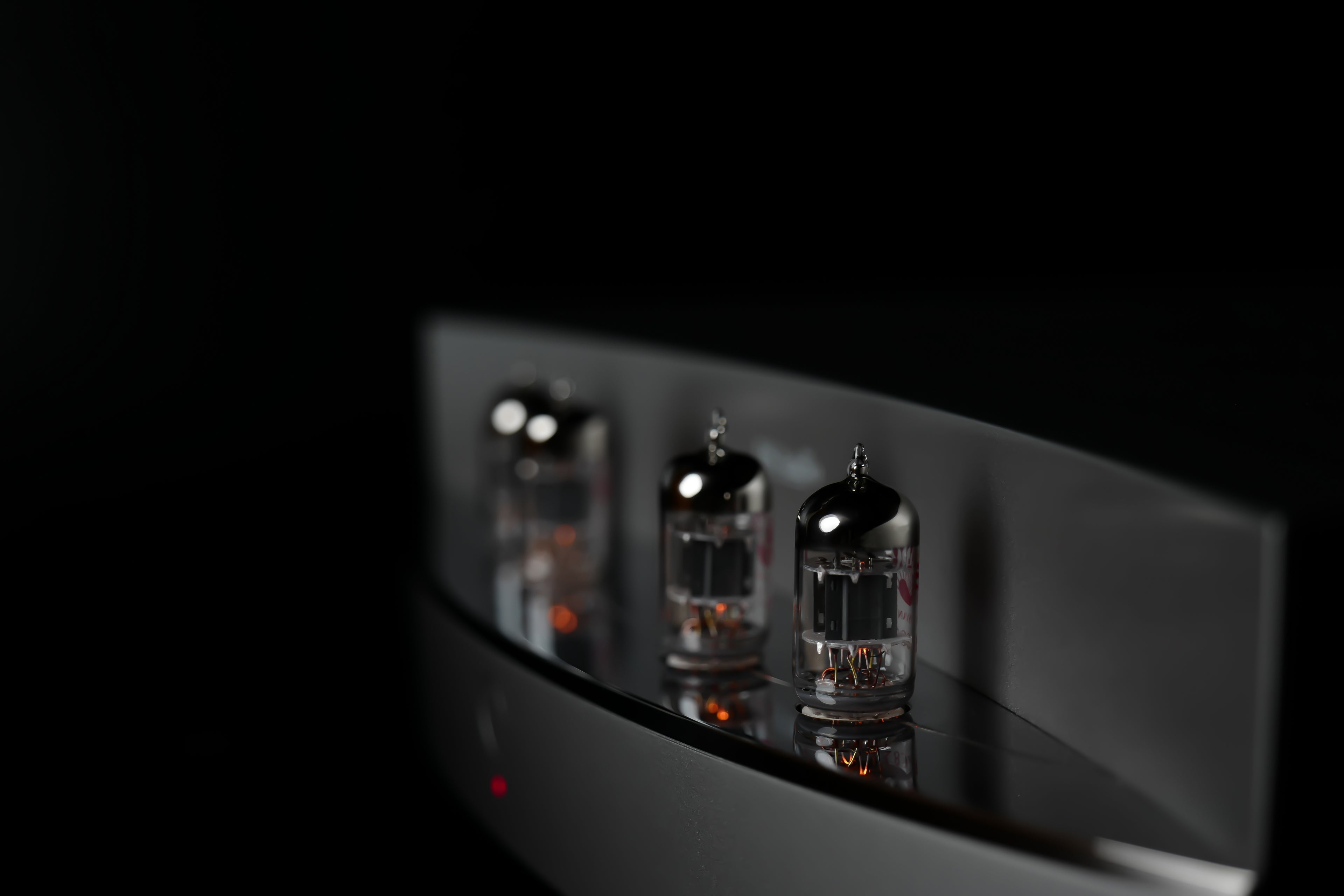
Four ECC82 (12AU7) triode tubes are used, two per channel, arranged in a straightforward two-stage amplification circuit. Within each channel, the inner tube handles voltage amplification and the outer tube handles output buffering, with passive equalization situated between the two stages. DS Audio describes the architecture as pairing low-impedance cathode follower output stages for a pure and dynamic audio experience. Unlike the hybrid TB-50, the TB-100 performs all amplification and equalization in vacuum tube circuitry -- no solid-state amplification stages are involved.
The four tubes are quad-matched to within 1% (0.1dB) using DS Audio's in-house tooling, with performance variations during operation minimized before pairs are selected. Tube replacement requires matched pairs and must be performed by DS Audio or an authorized service center.
Wideband Transformer Input
A wideband transformer converts the optical cartridge's photoelectric current output to a voltage signal at the input stage, ensuring precise phase alignment between left and right channels. DS Audio states the design achieves a flat frequency response within -1dB over a broad range from 10Hz to 70kHz. Paul Miller's laboratory measurements in Hi-Fi News confirmed a frequency response of -3.8dB to +1.0dB across 20Hz to 20kHz, with the characteristic low-frequency roll-off present in all DS Audio equalizers due to the optical cartridge's amplitude-proportional output behavior.
Twin-Mono Structure and Power Supply
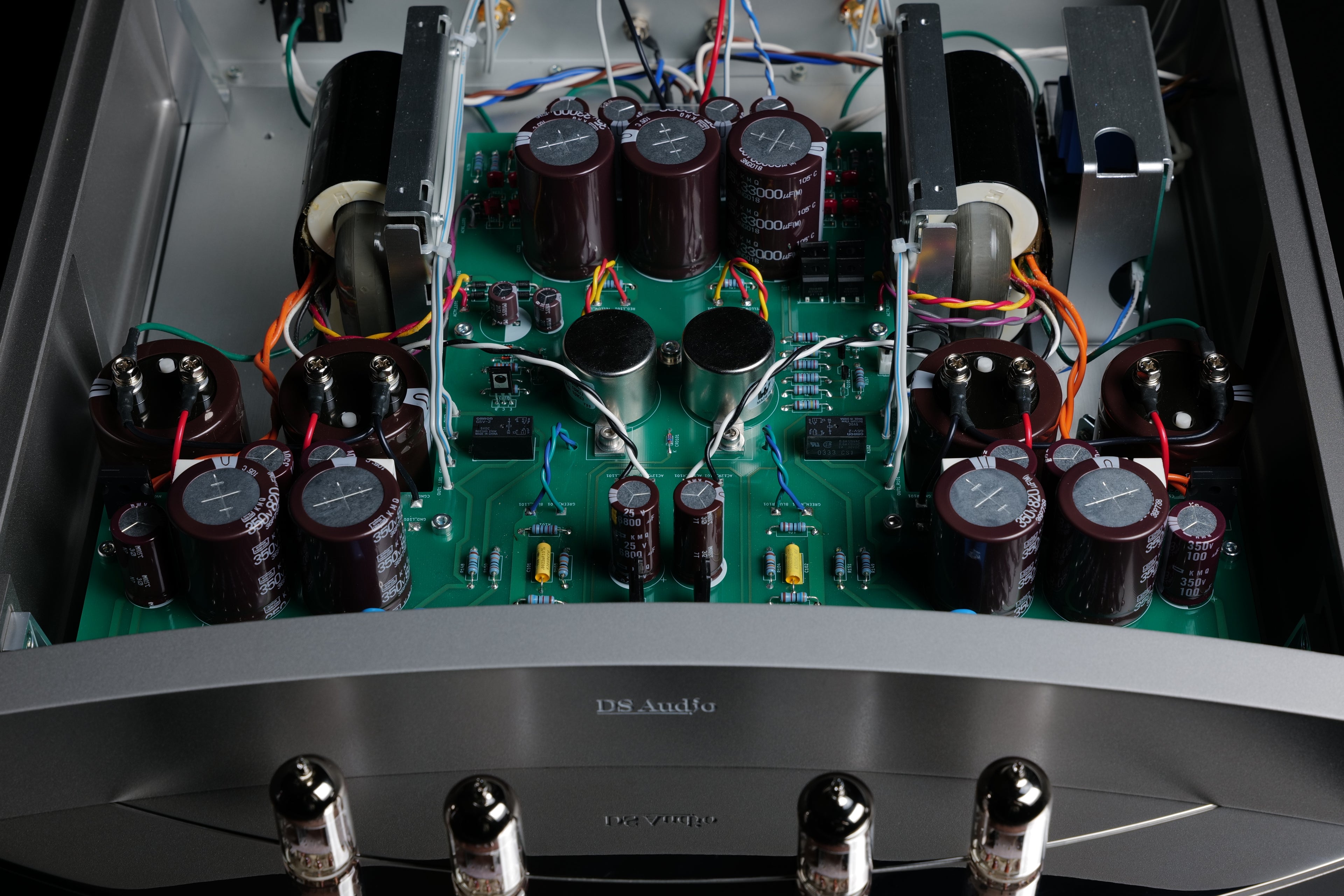
A symmetric twin-mono configuration provides completely independent grounds and power transformers for each channel, eliminating crosstalk between left and right. A dedicated low-noise regulated power supply handles LED power and the negative bias voltage for the optical cartridge, with separate power circuits and transformers for each channel ensuring stable voltage supply to the cartridge.
Outputs and Bass Management
Two RCA outputs are provided per channel. Output 1 is standard RIAA-compliant. Output 2 adds a 20Hz subsonic filter operating at -6dB per octave, intended for systems with large reflex-loaded loudspeakers where the optical cartridge's powerful bass extension might otherwise stress the woofers. A rear panel toggle switch selects between 30Hz and 50Hz primary bass roll-offs, and this setting applies to both outputs simultaneously. Both outputs are RCA; no balanced XLR output is provided.
After power-on, the front panel LED glows orange during the warm-up period of 60 to 90 seconds. When the LED changes to red, the automatic mute function deactivates and the TB-100 is operational.
Critical Reception
Reviewing the TB-100 for Hi-Fi News, Ken Kessler awarded it an Outstanding Product designation and described its sonic character as veering "toward the warm and romantic" compared to DS Audio's solid-state equalizers, which he characterized as hyper-precise. Paul Miller's laboratory measurements returned an A-weighted S/N ratio of 80.3dB, input overload of 1,150mV, and maximum output of 24V at 1% THD. Writing for Analogue Fellowship in August 2025, Dato' Danon Han reviewed the TB-100 paired with the DS Audio Master 3 cartridge and found the combination to be balanced in tonality, natural and organic, with the tube buffer contributing warmth and richness without reducing resolution or detail.
DS Audio positions the TB-100 and the hybrid TB-50 as different sonic directions rather than upper and lower tier products: the TB-100 is the all-tube option for those who prioritize warmth and organic character, while the TB-50 offers greater speed and clarity in a hybrid architecture.



 Pay $0 today
 Trial
 Pay