The engineering behind the Goldmund Telos 670
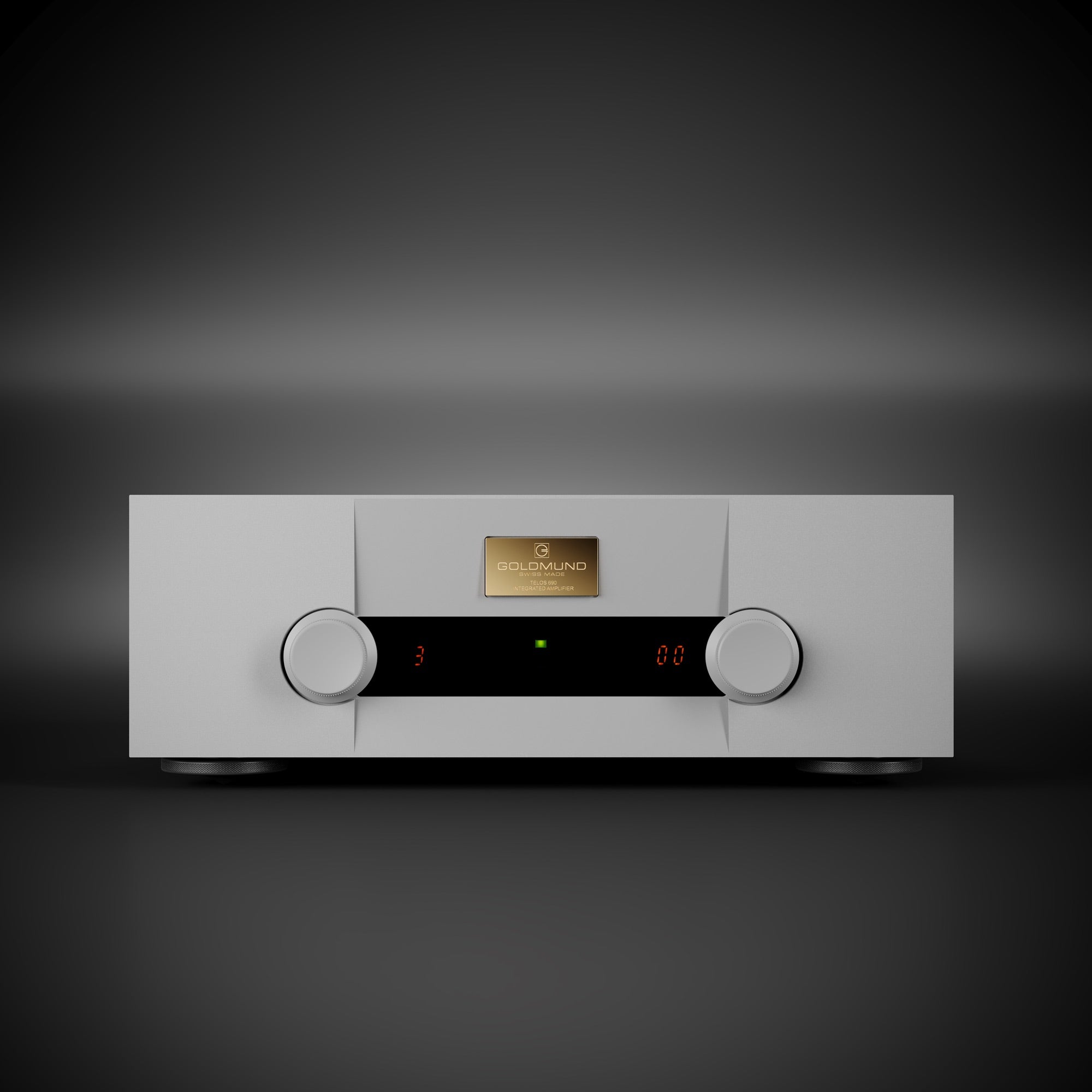
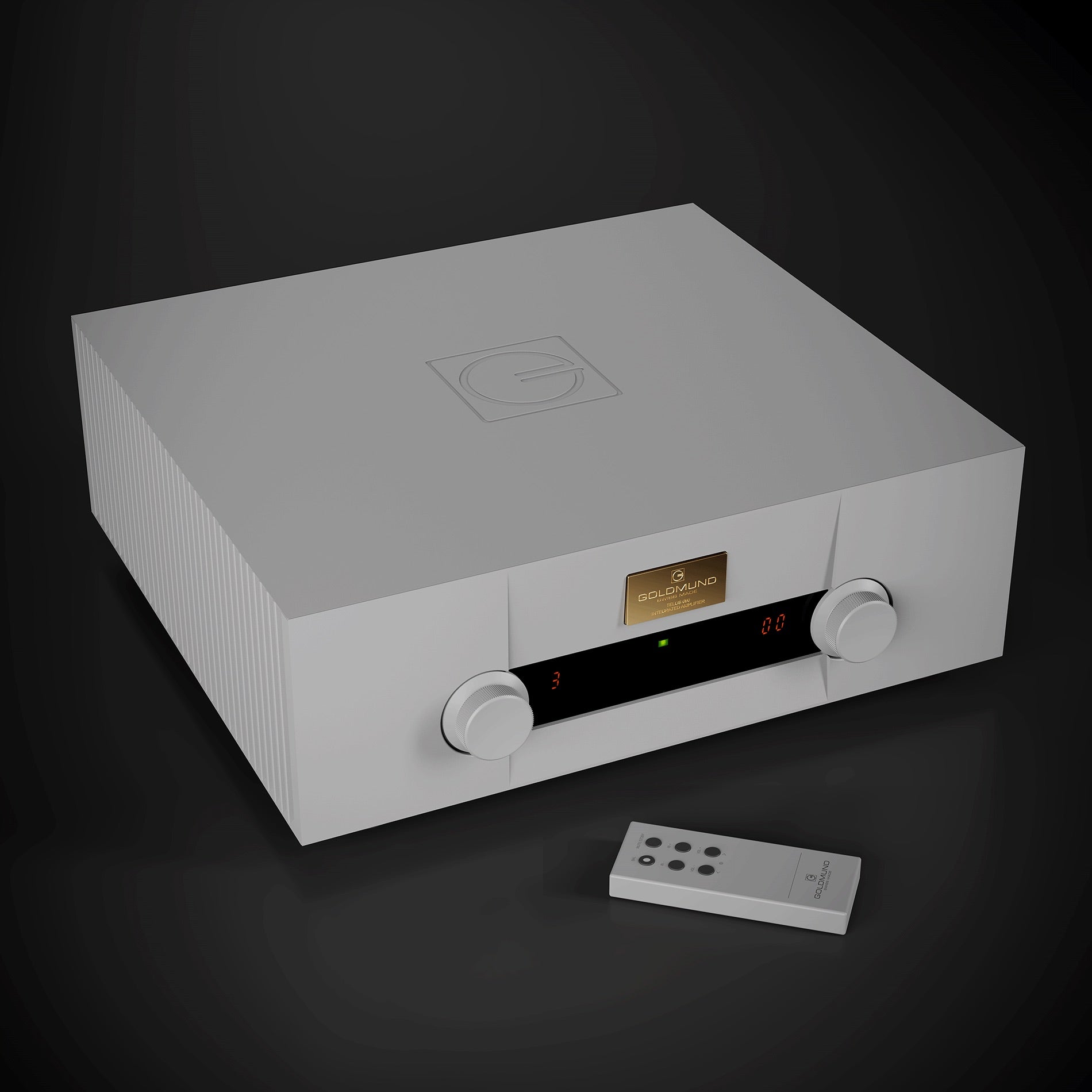
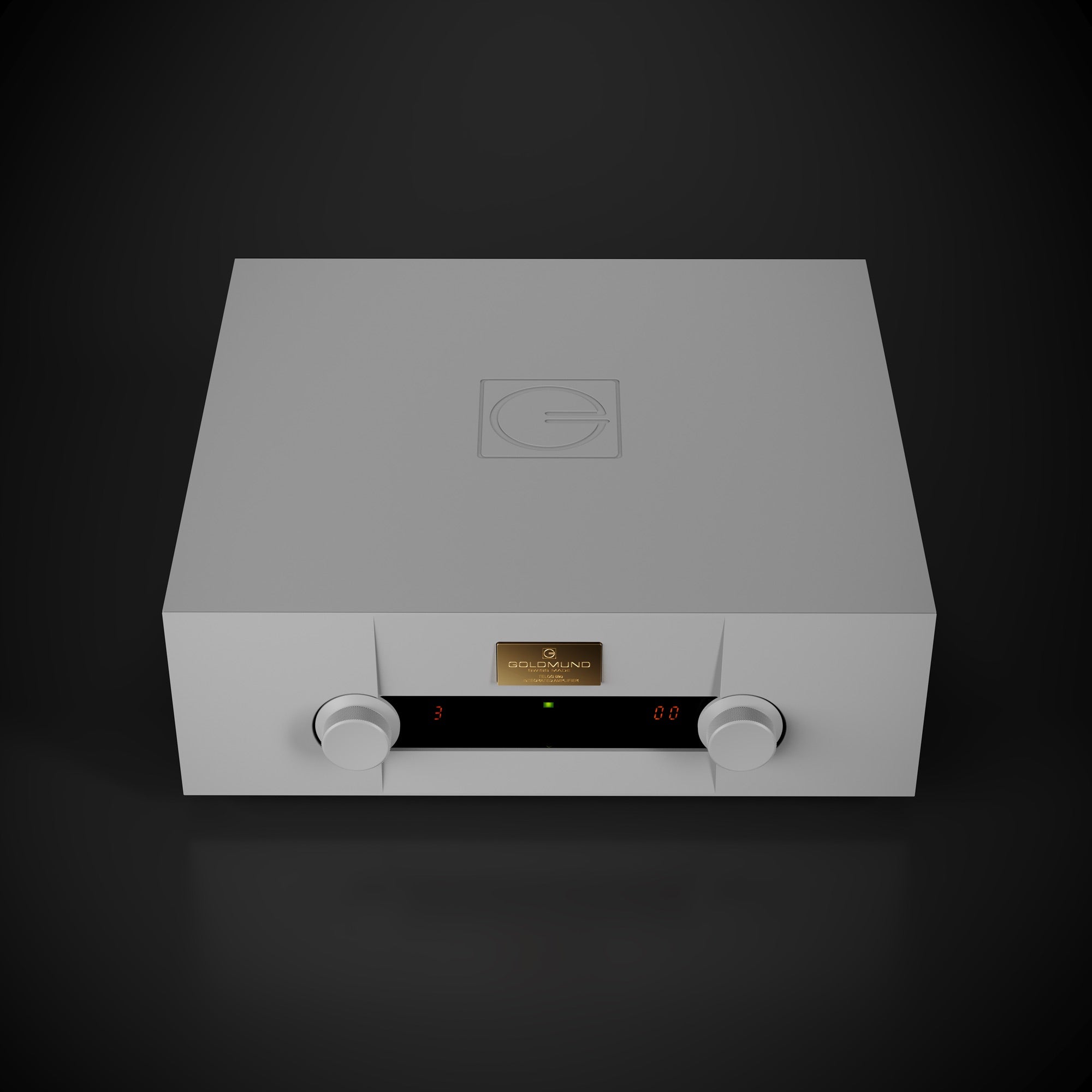
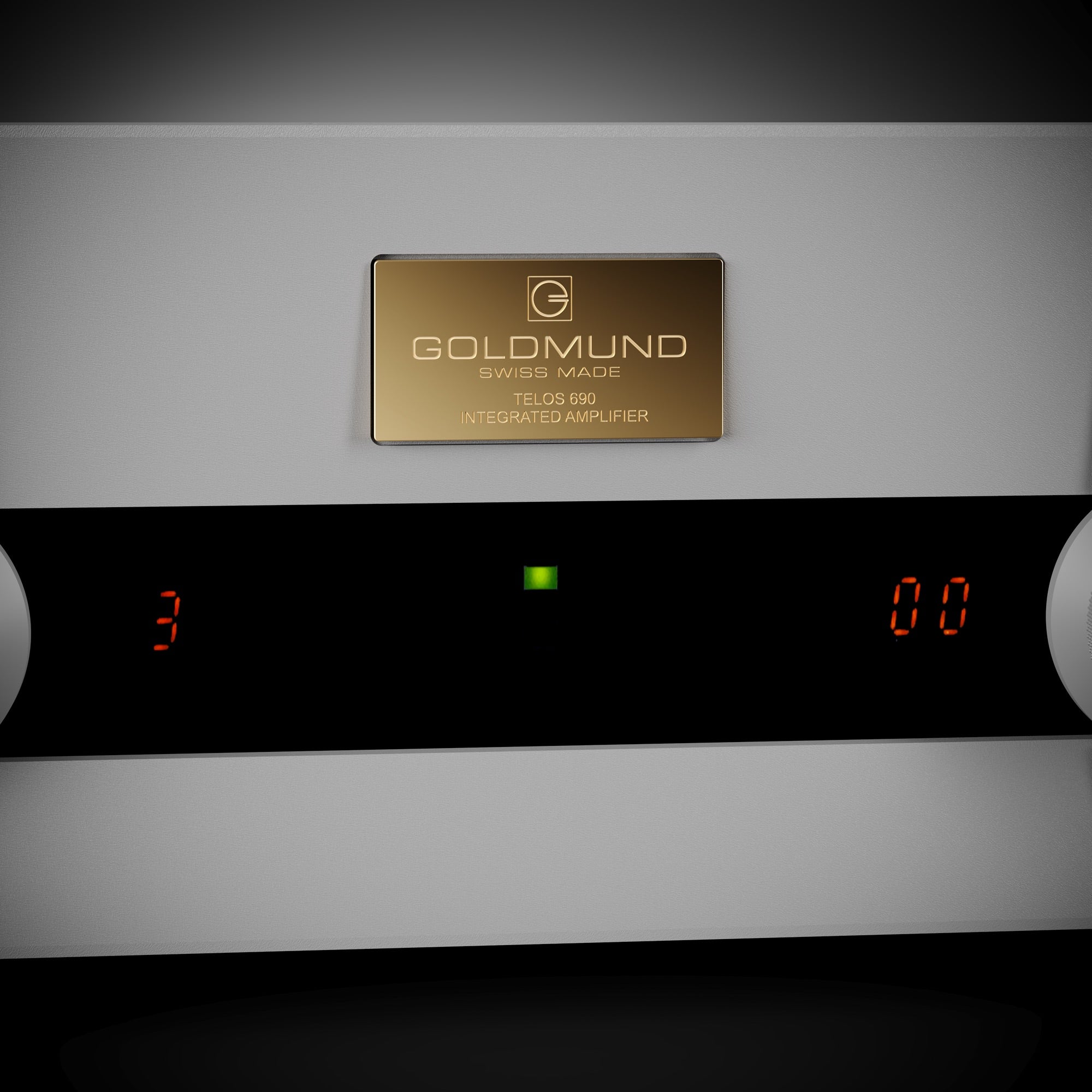
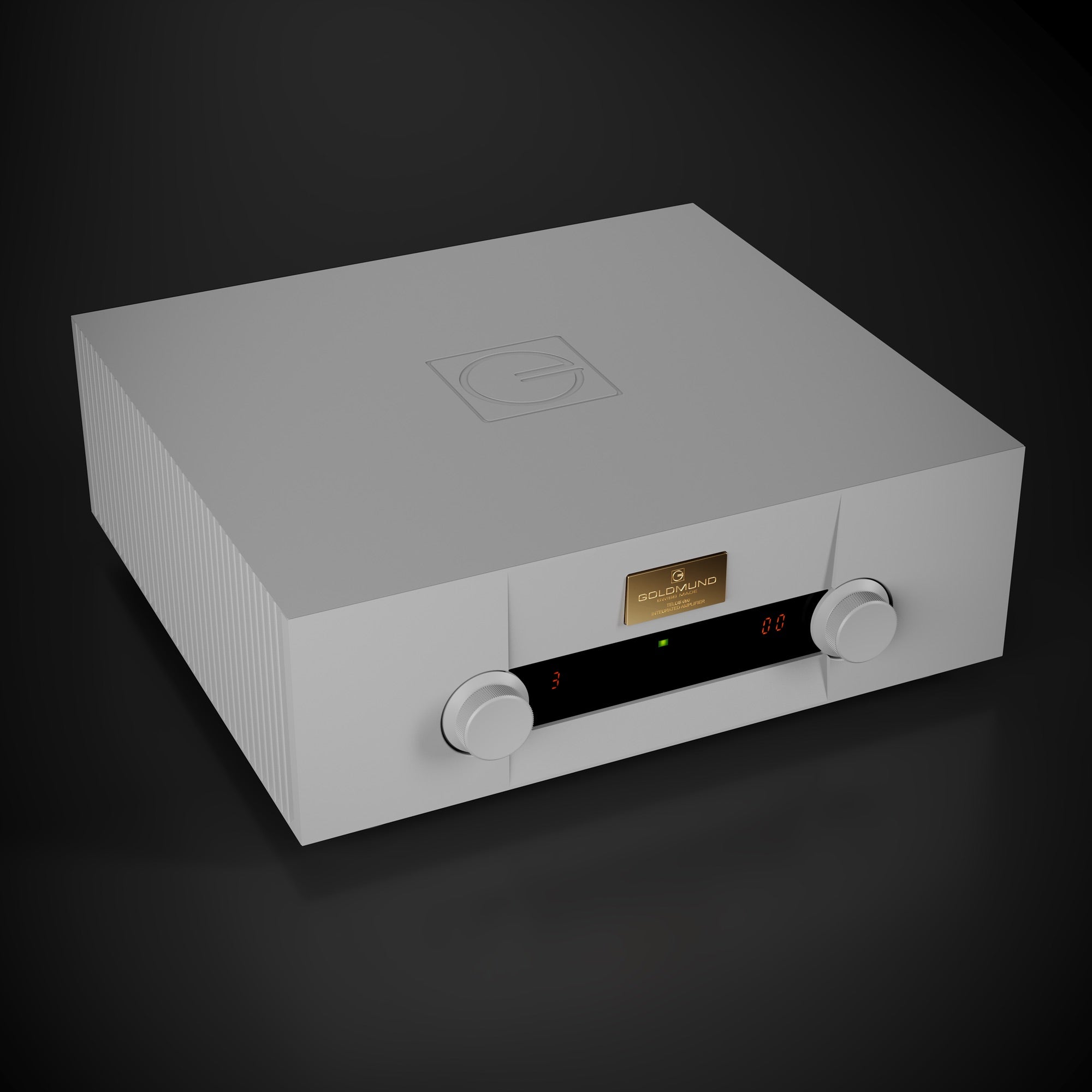
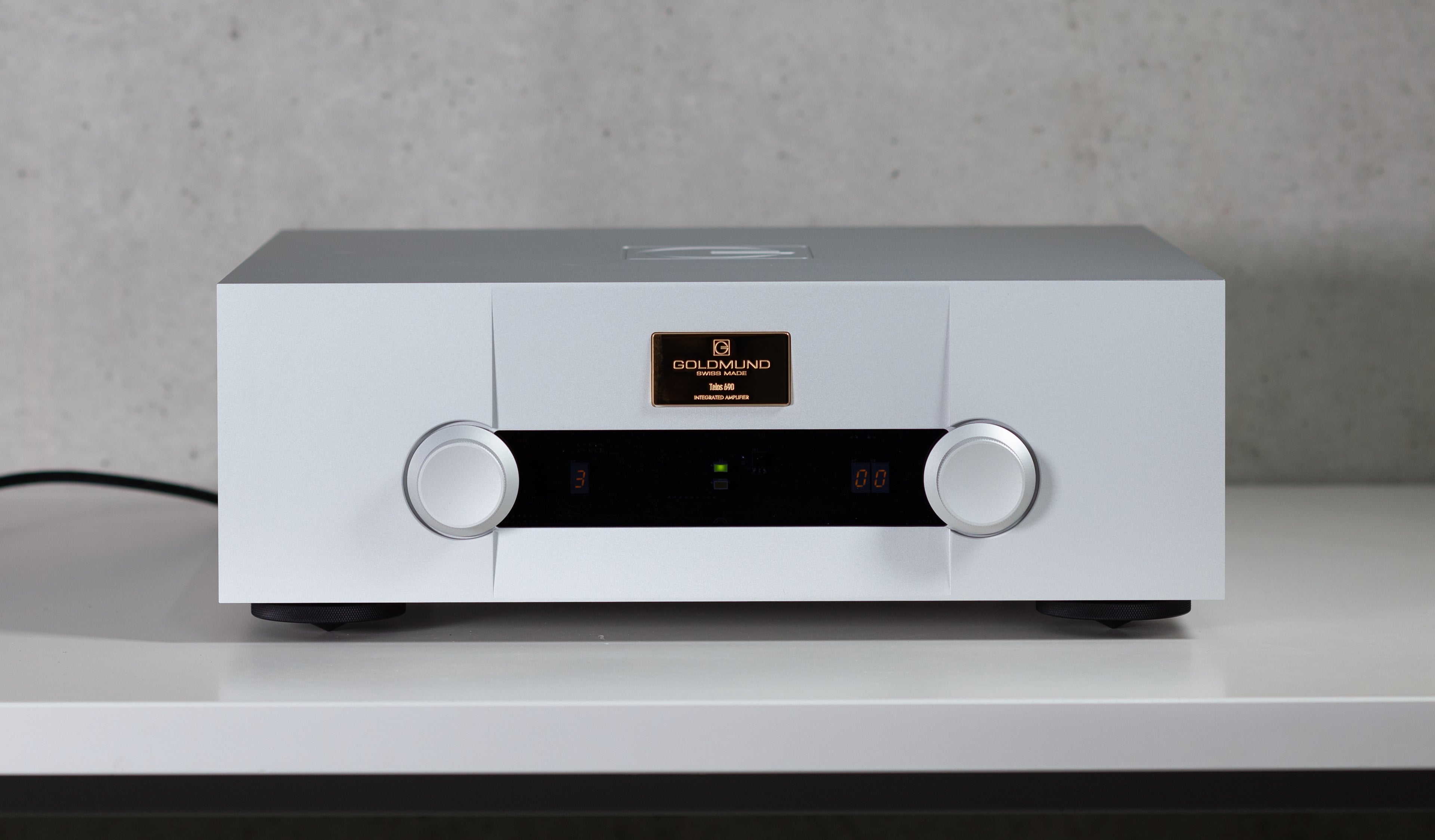
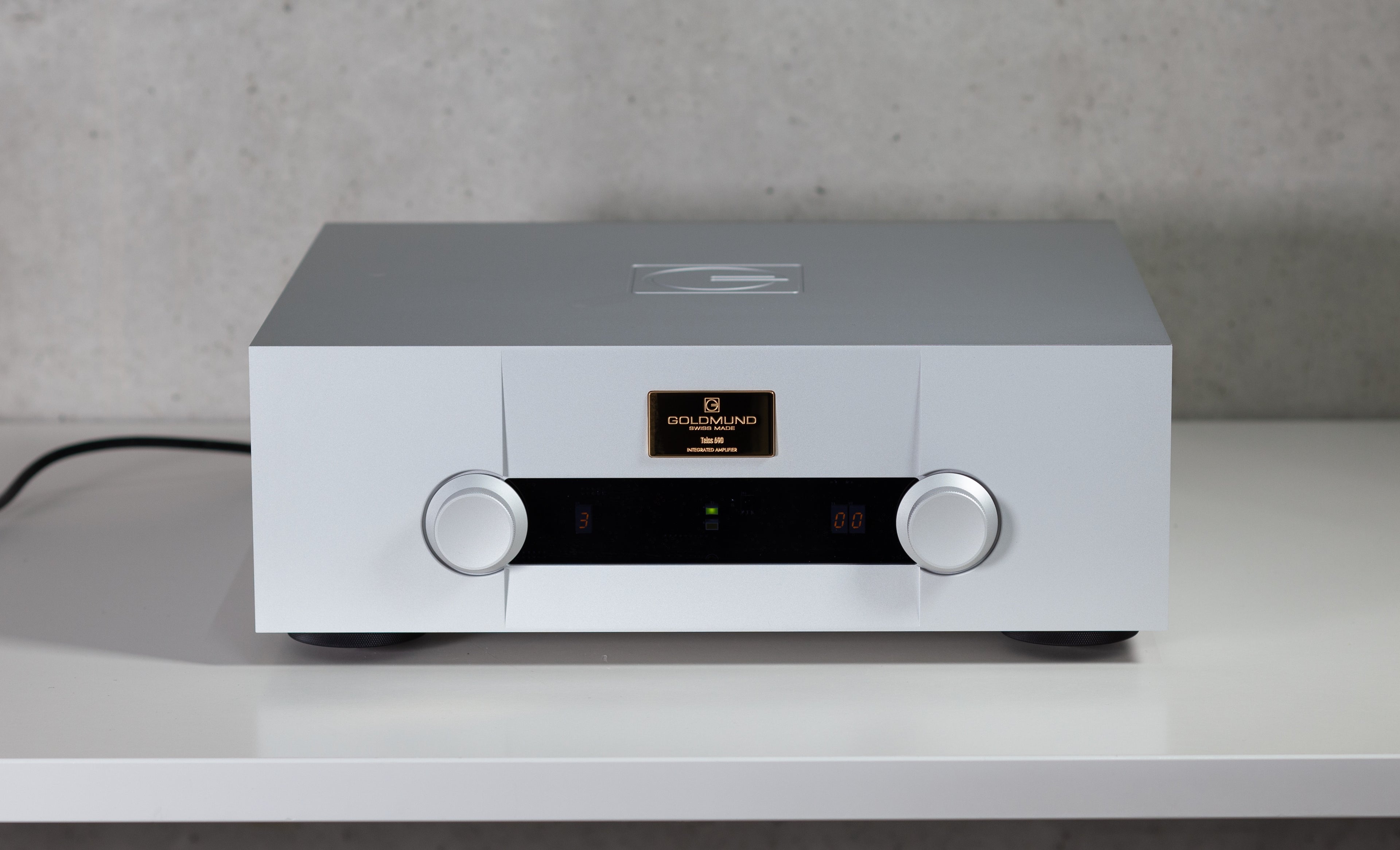
The Goldmund Telos 670 combines preamplification, a built-in DAC, and Class AB stereo amplification in a Swiss-made aluminum enclosure. Maximum output is rated at 215 W per channel into 8 ohms at 1% THD. Two 300 VA toroidal transformers and a 13,600 µF capacitor bank support its power supply, while analog and digital inputs accommodate a range of source arrangements.
Position in the Goldmund range
The Telos 670 sits below the Telos 690 in Goldmund's integrated amplifier range, sharing the Telos circuit philosophy and a similar selection of analog and digital inputs. Its 395 mm chassis depth is shallower than the 690's 450 mm, making the physical difference relevant when planning an installation.
The 690 increases the maximum 8-ohm output rating to 250 W per channel and uses two 350 VA transformers with a 46,000 µF capacitor bank. The 670's two 300 VA transformers and 13,600 µF bank define a different supply configuration. Comparing the models therefore involves power-supply design and available space as well as their output ratings.
Telos amplification technology
Goldmund's proprietary Telos architecture combines linear analog circuitry with wide bandwidth. The design prioritizes linearity through the amplification stages, low distortion, and control of timing behavior. These electrical priorities are shared with the broader Telos amplifier family.
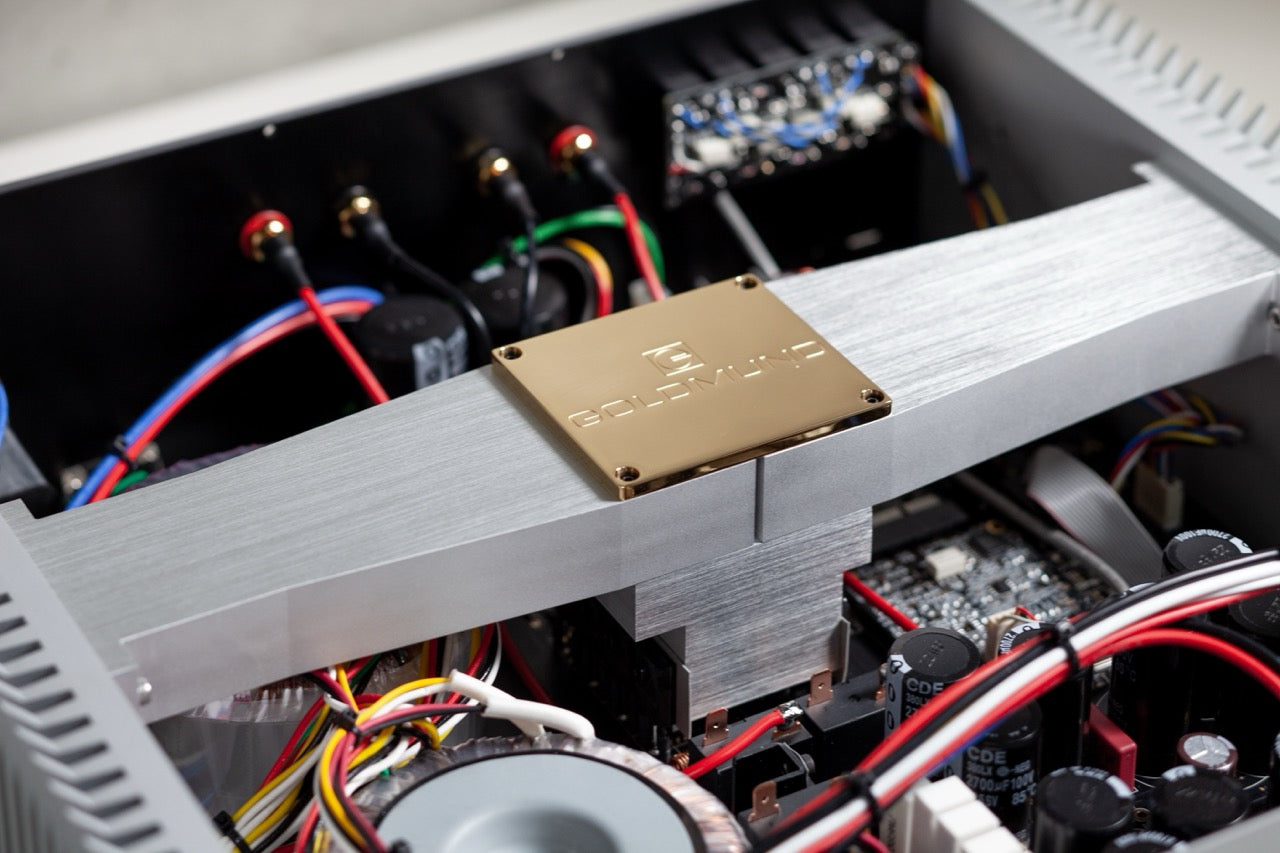
The 670 separates high- and low-current circuit paths to reduce interaction between stages. Goldmund also develops selected electronic and mechanical components specifically for its amplifiers, coordinating the circuit design with the power supply, enclosure, and mechanical support.
Power supply and loudspeaker control
Two 300 VA toroidal transformers provide 600 VA total transformer capacity, supported by a 13,600 µF capacitor bank. This supply serves the stereo amplifier within its 440 × 160 × 395 mm enclosure.
The damping factor is specified as 600 at 1 kHz into 8 ohms. Low output impedance forms part of Goldmund's approach to speaker-driver control, particularly at low frequencies. Loudspeaker sensitivity, impedance behavior, and listening conditions help determine whether the 670 is the appropriate match.
Measured performance
THD+N is specified below 0.08% from 20 Hz to 20 kHz at 30 V RMS output, measured unloaded. SMPTE intermodulation distortion is below 0.02%, also unloaded. Dynamic range is 100 dB within a 22 kHz measurement bandwidth.
Built-in DAC and digital inputs
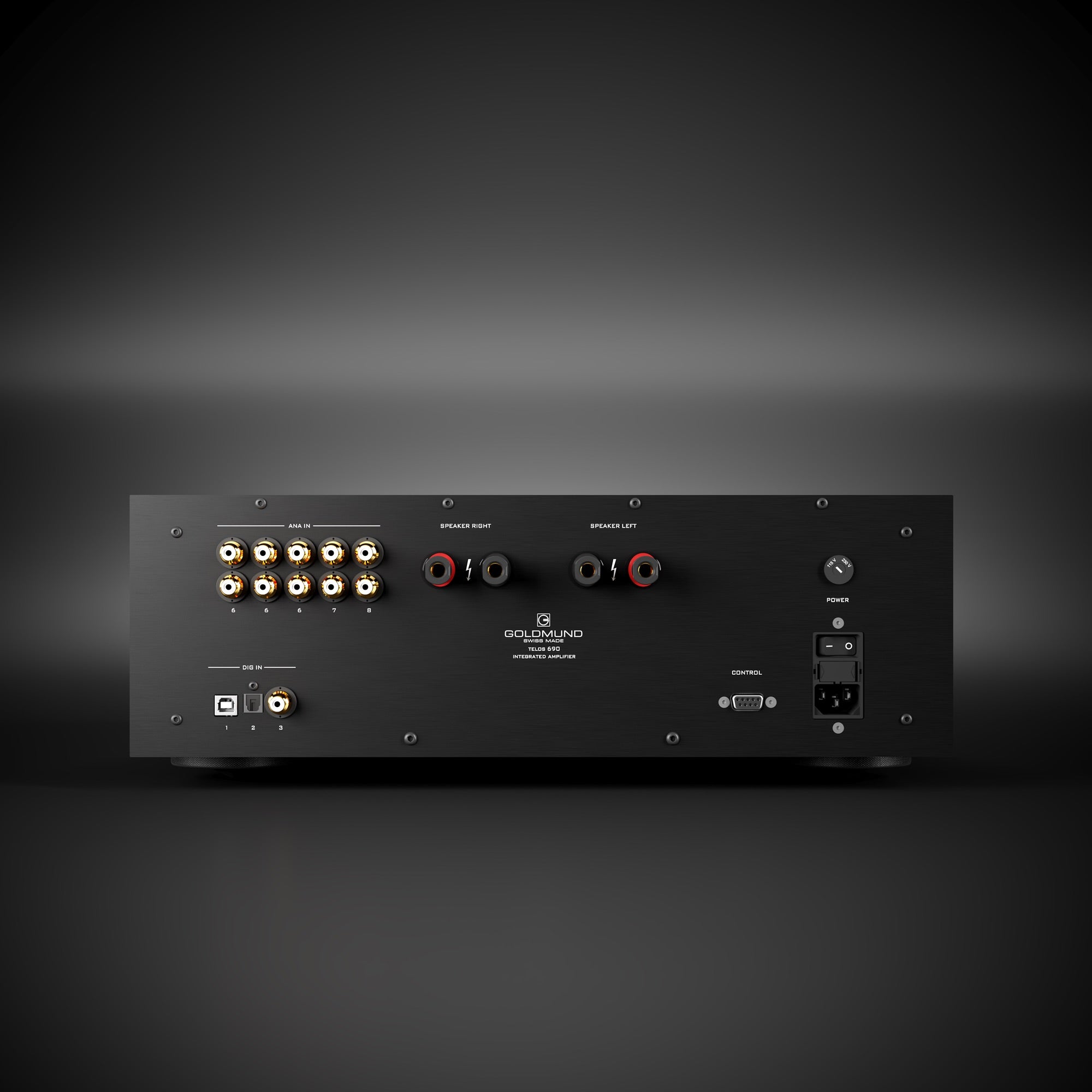
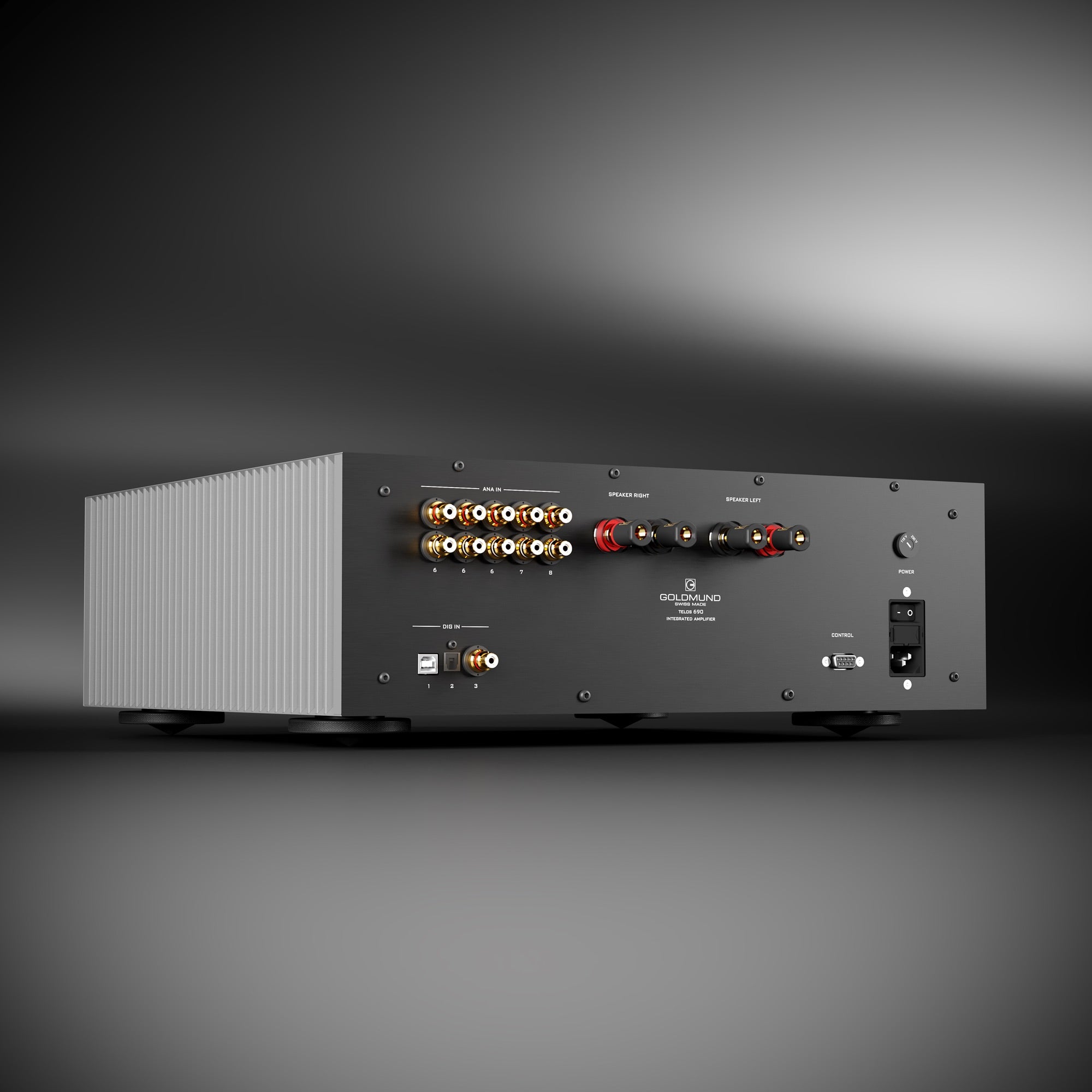
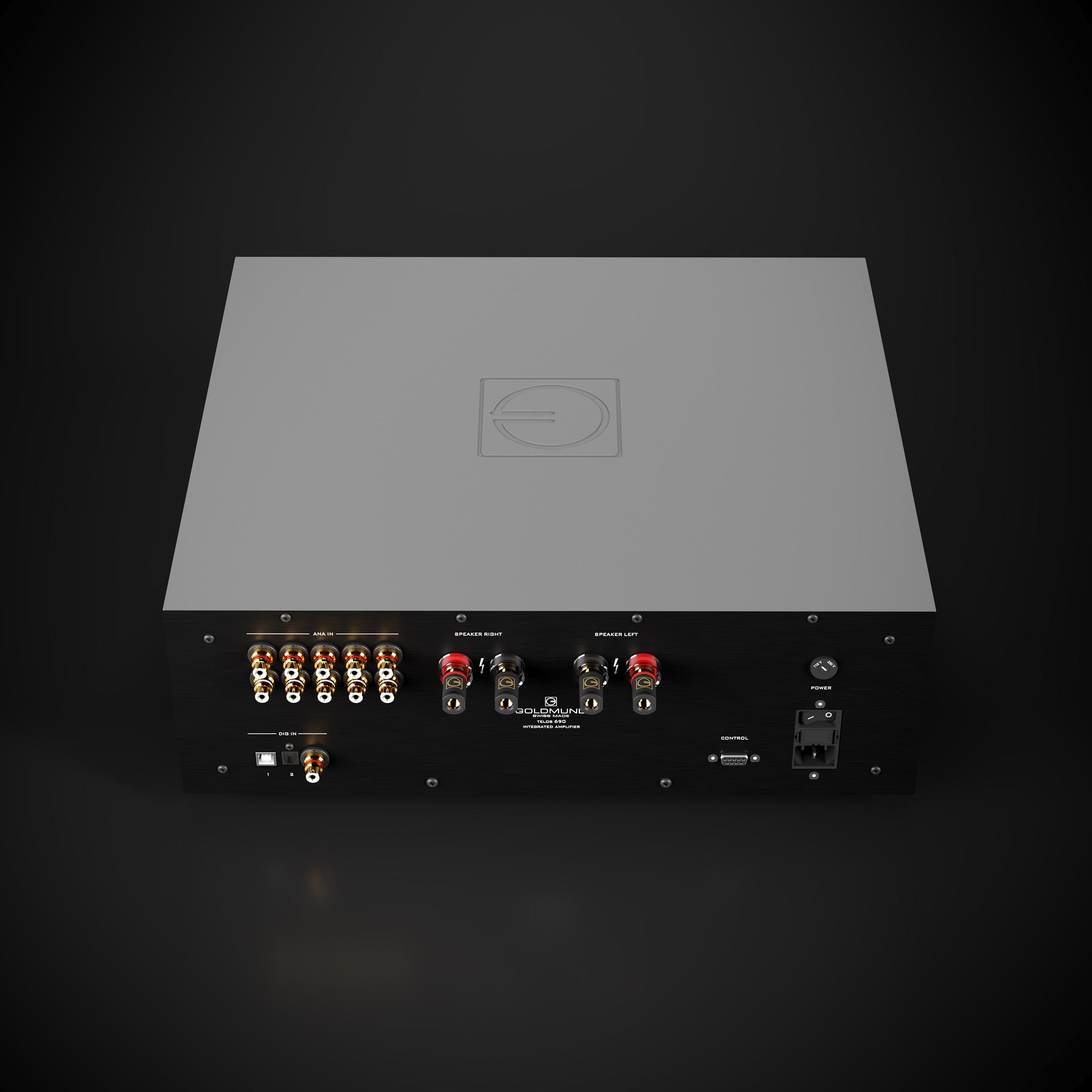
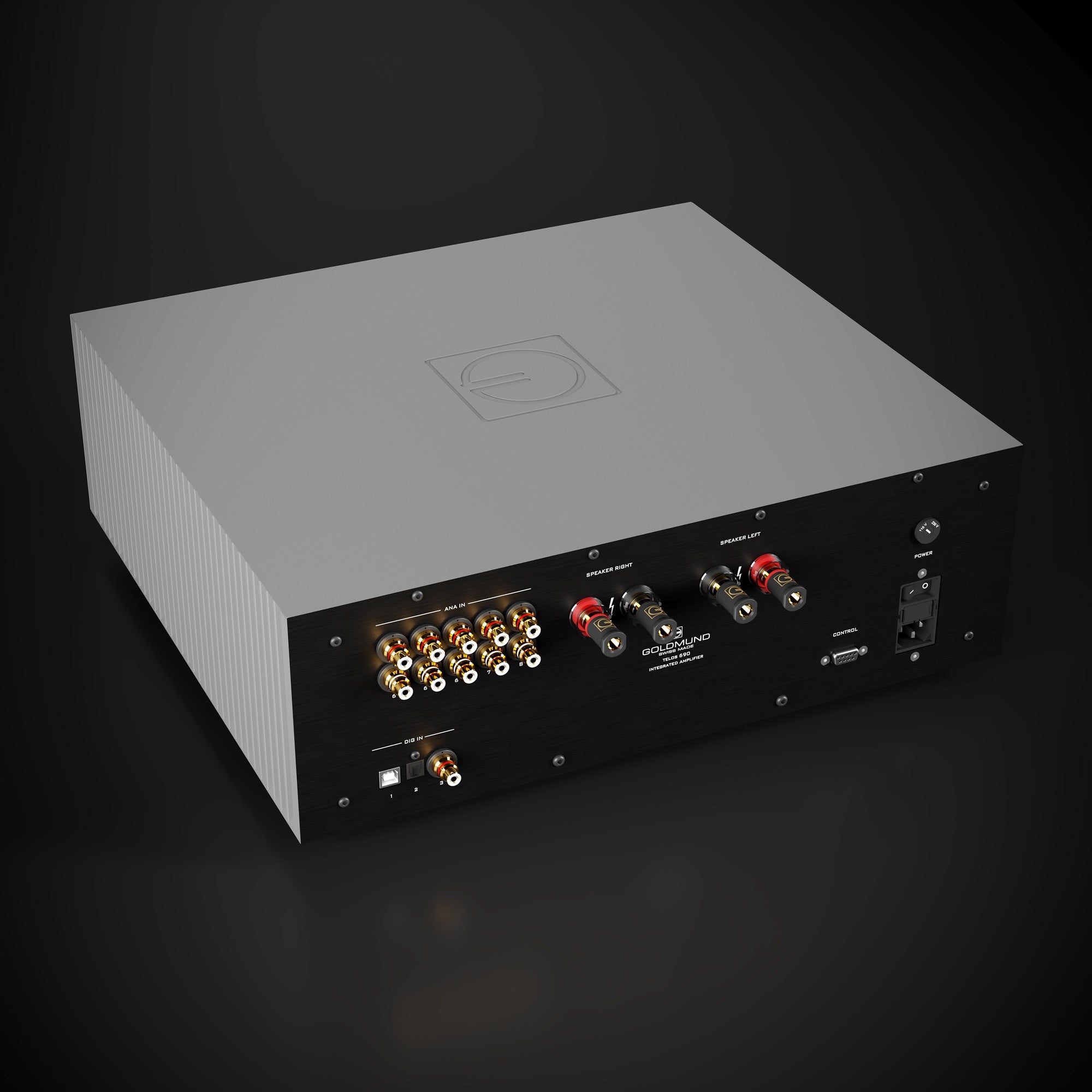
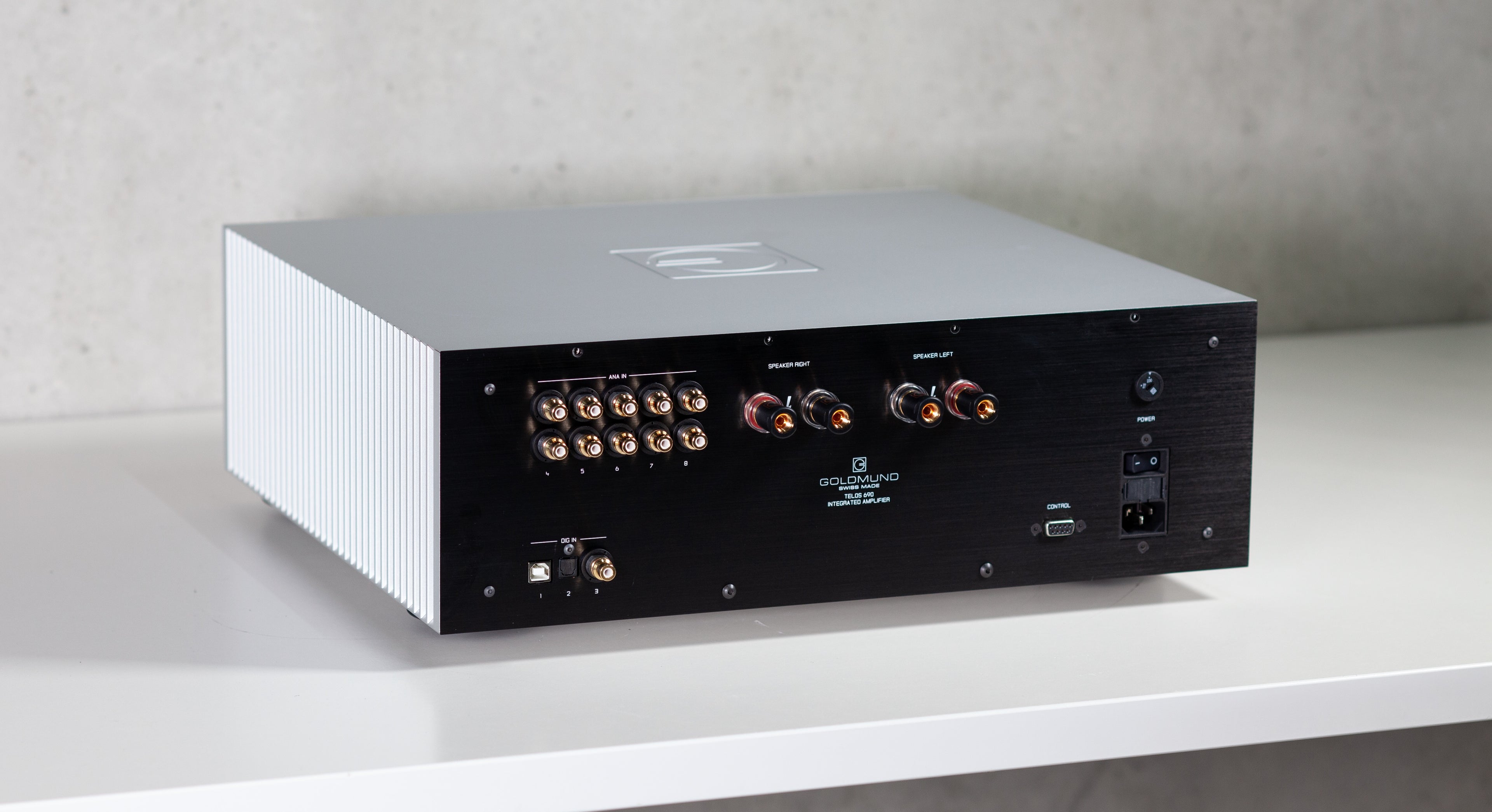
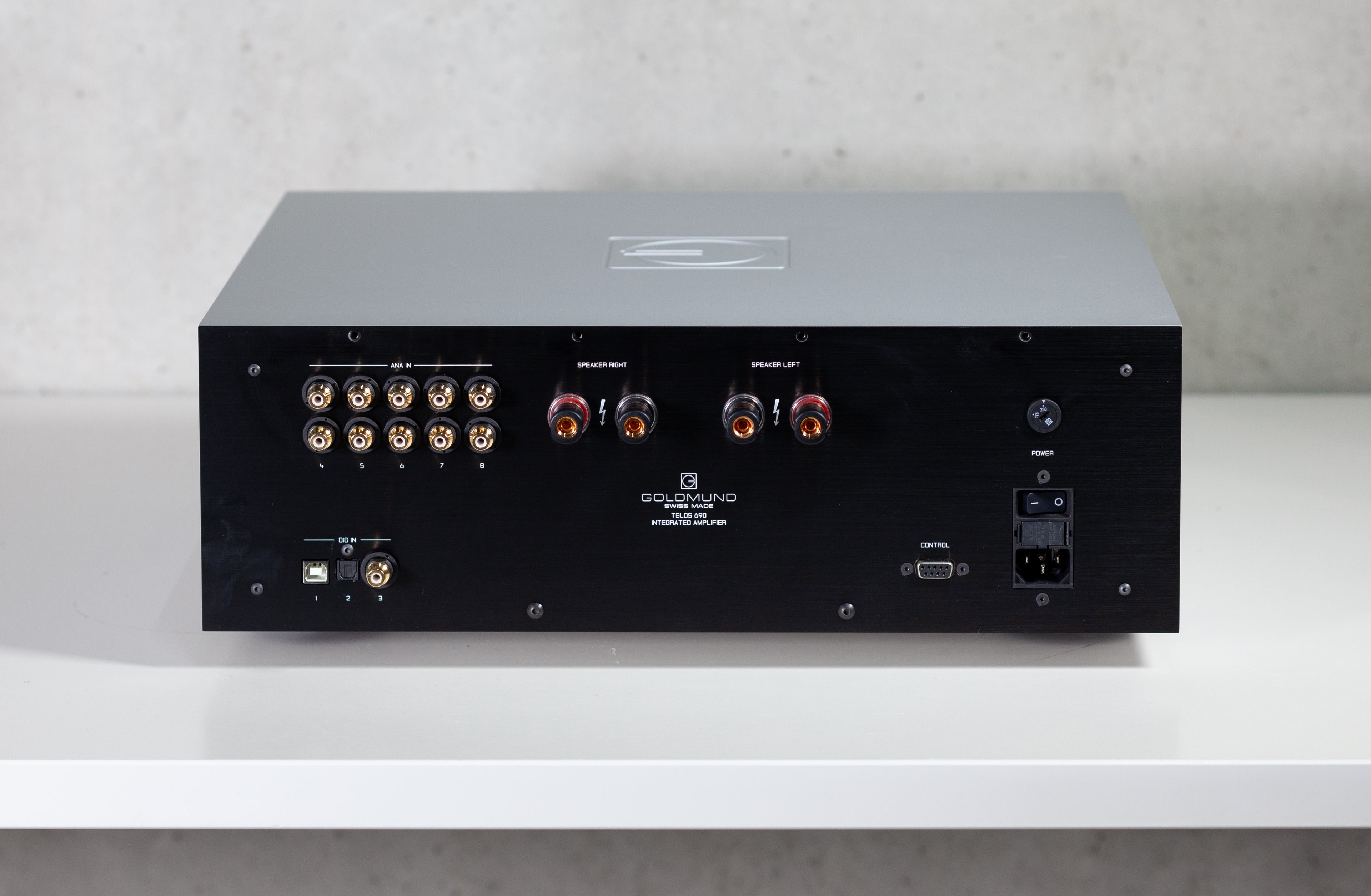
USB Audio Class 2.0 supports PCM up to 384 kHz/32-bit and DSD64 or DSD128 via DoP. Toslink optical and coaxial RCA S/PDIF inputs provide additional connection options for compatible digital transports and streamers. The high-resolution figures above apply specifically to USB.
The internal DAC keeps digital conversion within the integrated amplifier, while the analog inputs allow an existing external DAC to remain in the system. That flexibility is useful when deciding which source components to retain and how the system might develop over time.
Analog connectivity and control
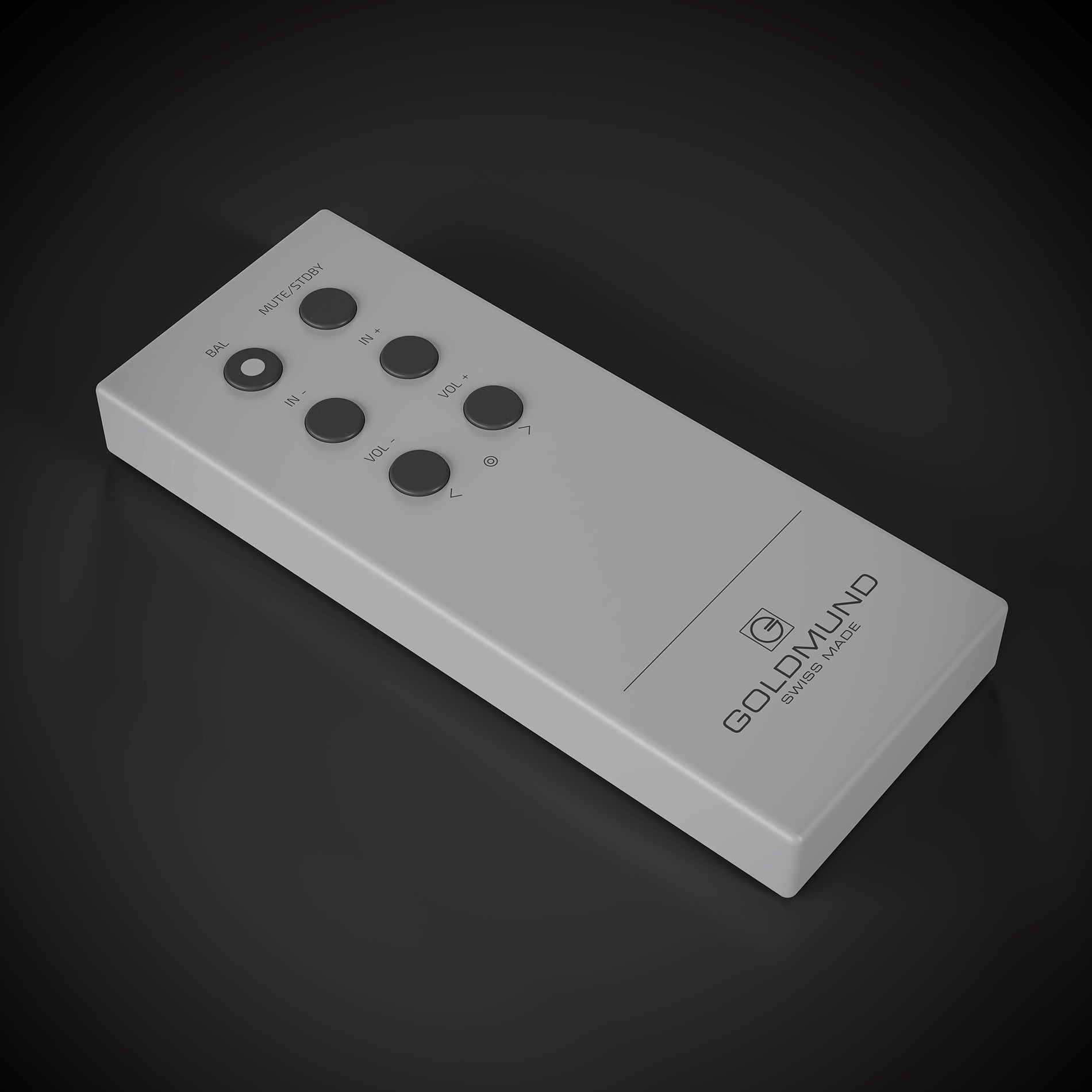
Five stereo RCA input pairs accommodate line-level sources, including external DACs and phono stages. There are no balanced XLR analog inputs. Left and right binding posts provide the speaker connections. Source selection and volume are available from the front panel and remote, with RS232 provided for system control.
Construction, shielding, and passive cooling
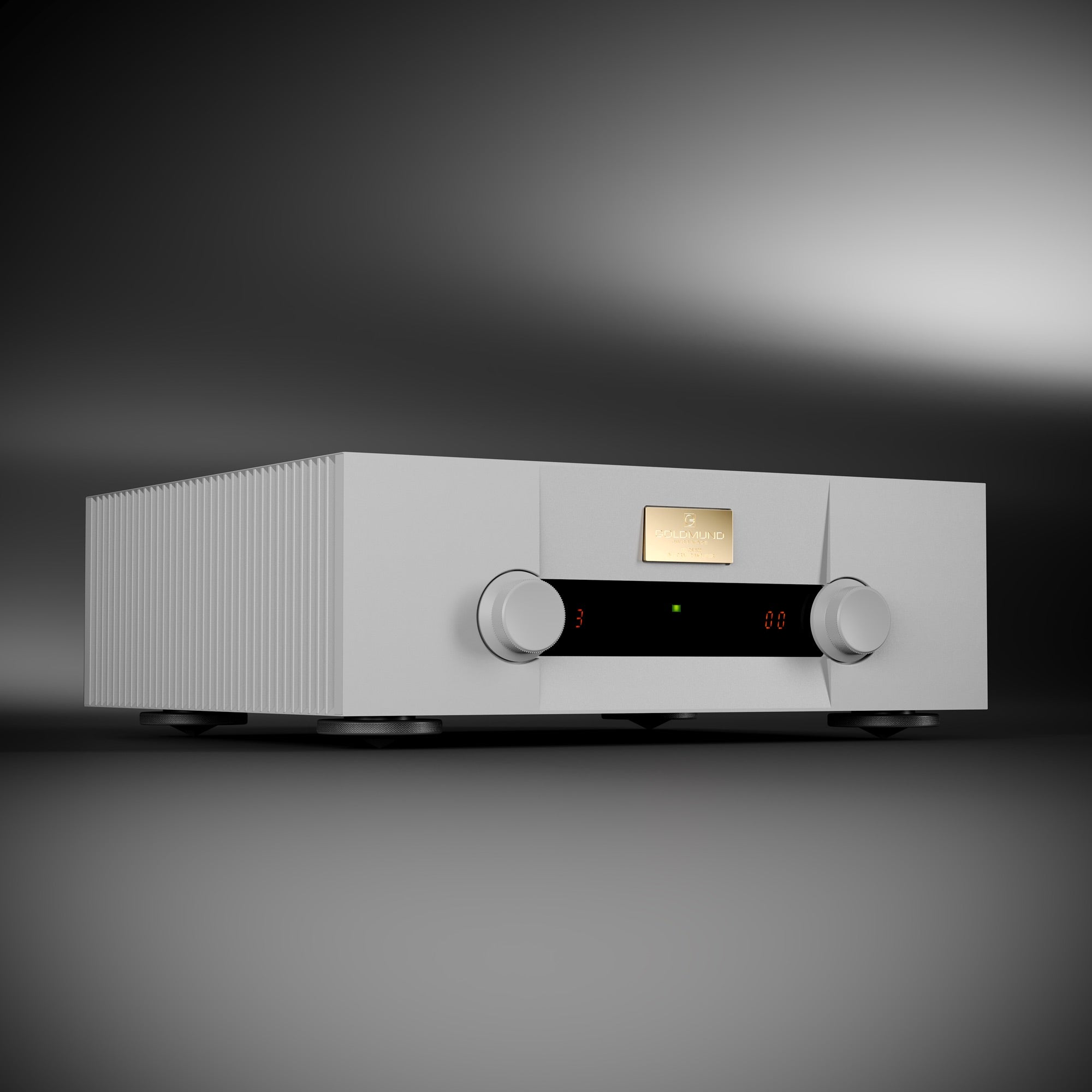
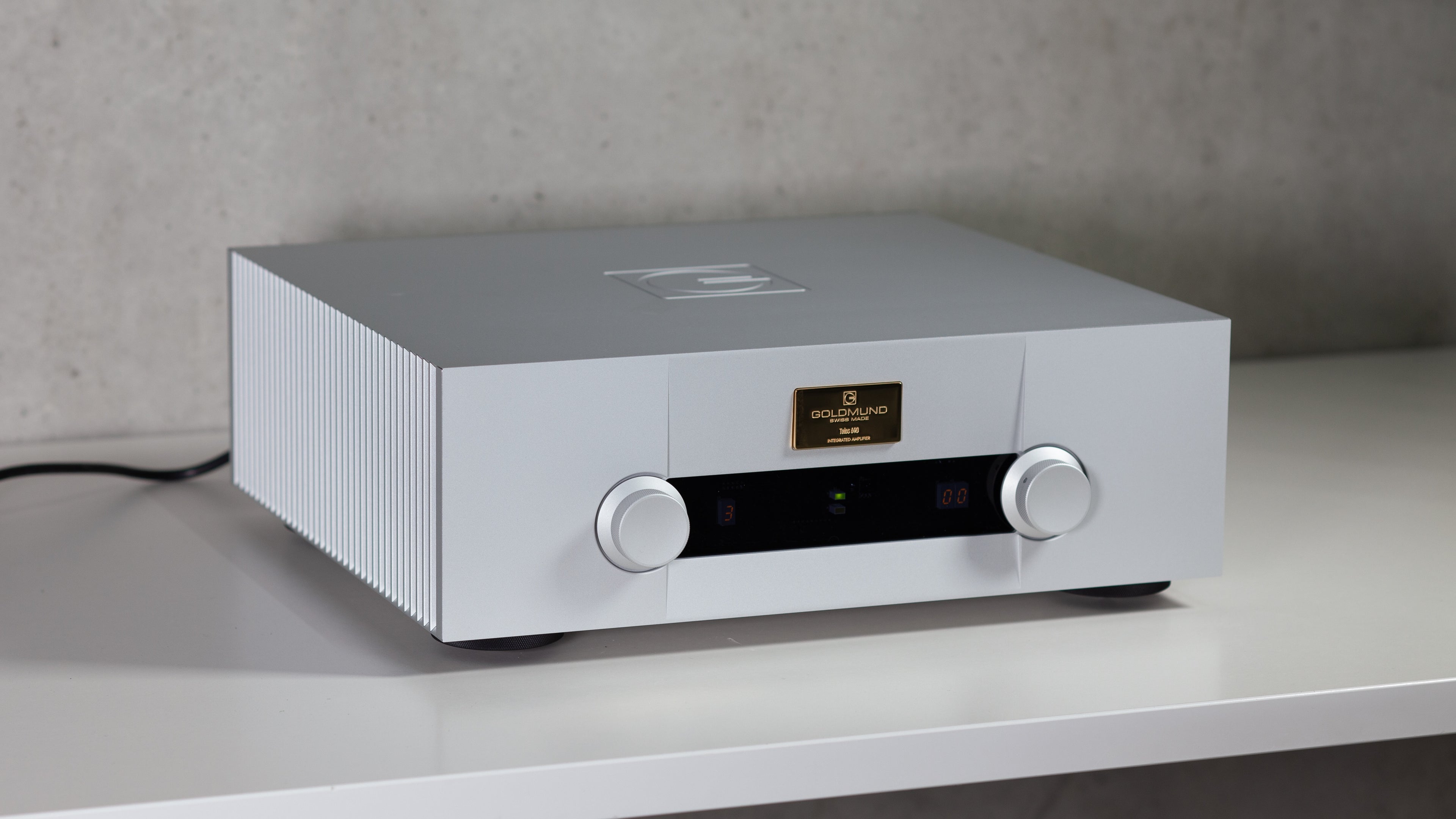
The joint-free, precision-machined enclosure incorporates 9 mm aluminum casing and a 30 mm radiator section. These surfaces function as passive heatsinks, dissipating operating heat without cooling fans. The aluminum structure also provides electromagnetic shielding around the electronics.
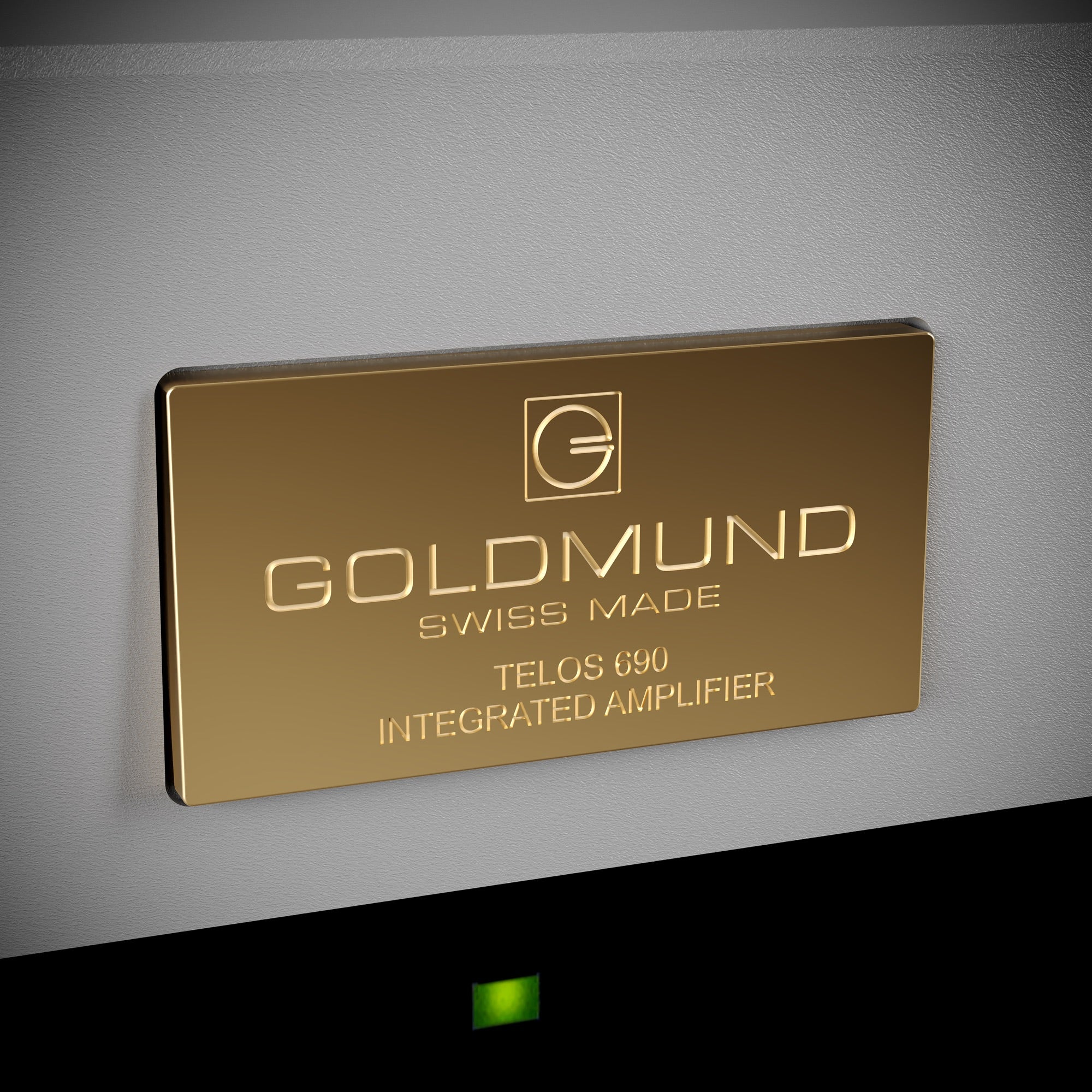
The micro-blasted surfaces and sculpted design details follow Goldmund's current visual language. The enclosure's mass and structure serve electrical and mechanical purposes alongside its appearance, with heat dissipation and resonance management considered as part of the overall design.
Mechanical Grounding, testing, and finishes
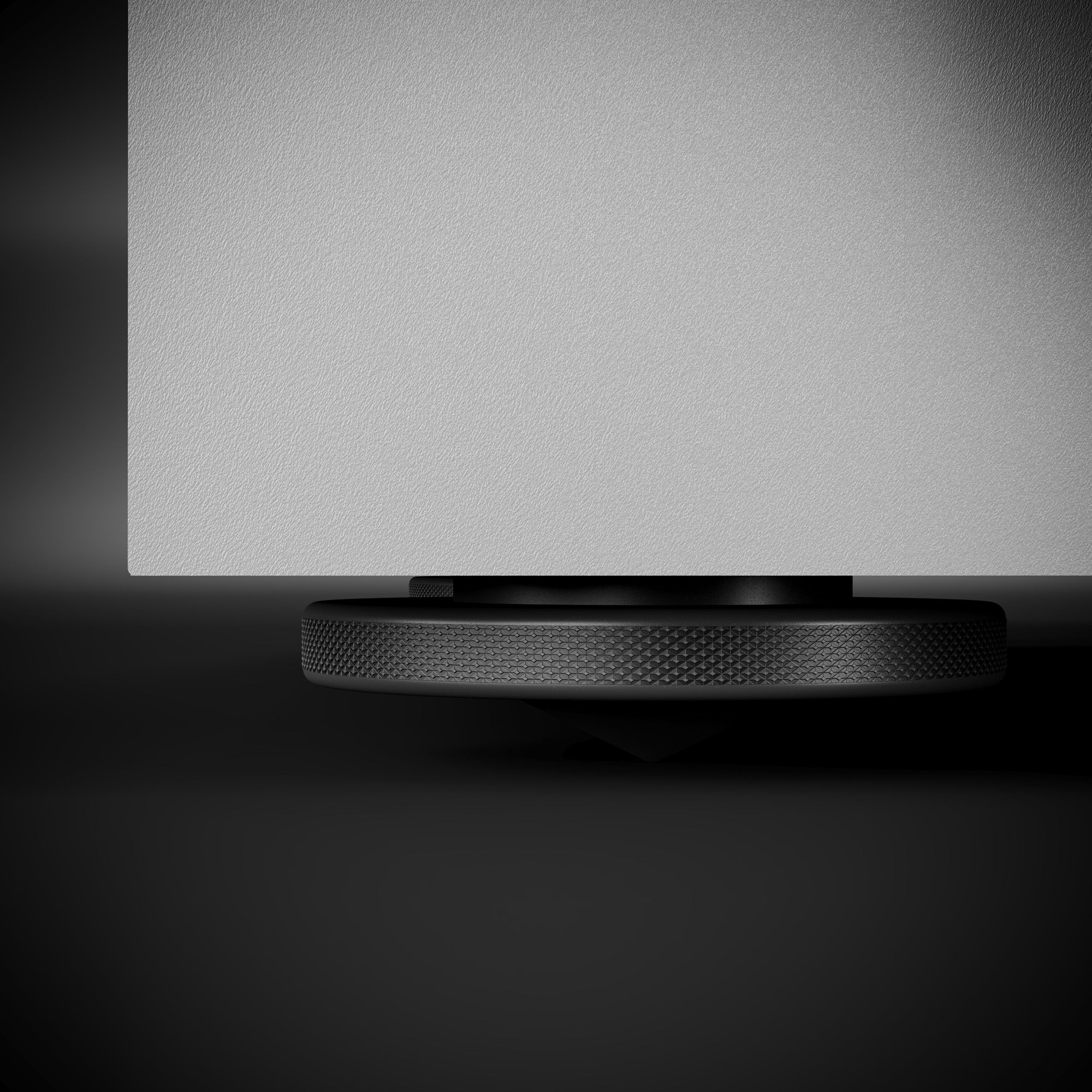
Goldmund's conic feet are a key element of its Mechanical Grounding system, providing a defined mechanical path between the chassis and its support. The company describes technical testing and listening evaluation as parts of its development and production process.
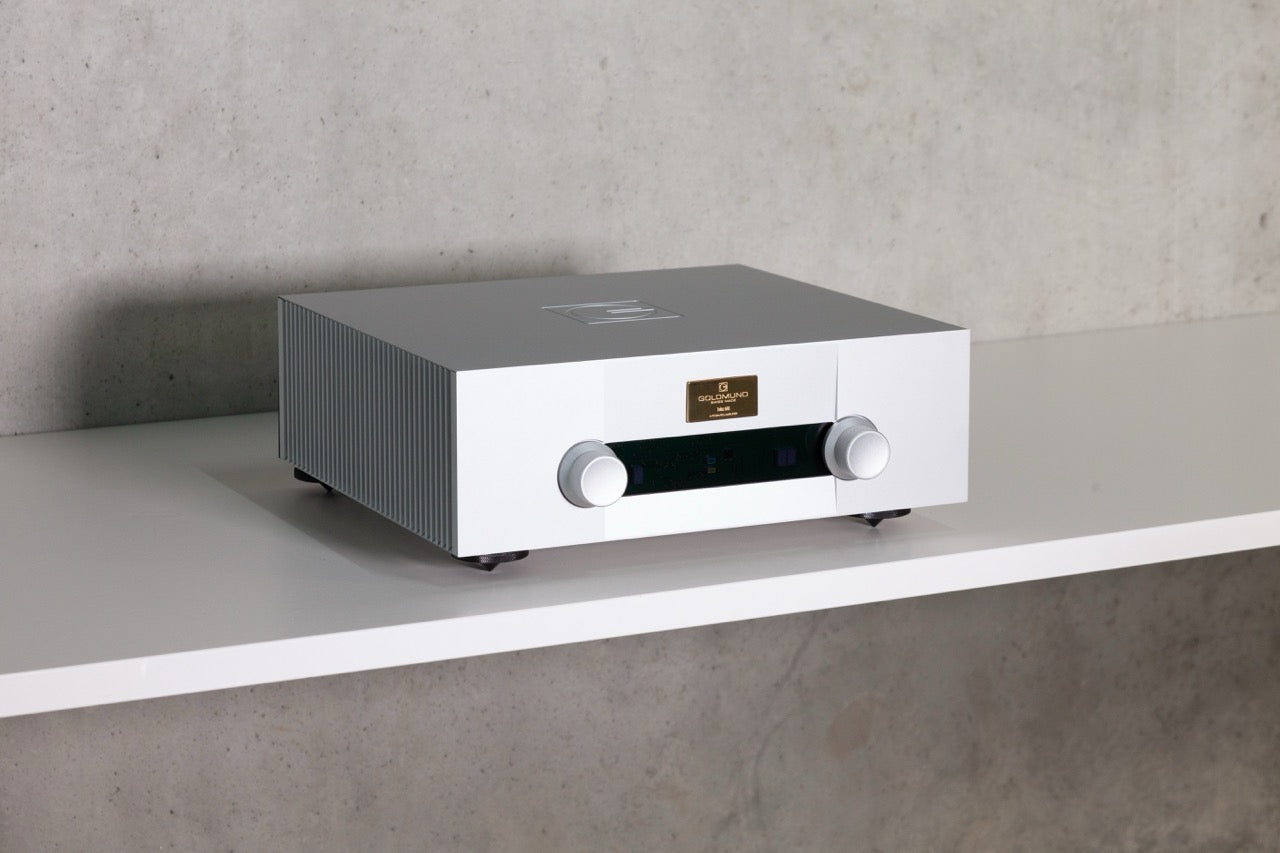
The Telos 670 weighs 24.5 kg and is offered in grey, with black available on request. Finish availability and lead time can be confirmed before ordering. A suitable supporting surface, ventilation, and rear cable clearance should be allowed for in the installation.
Independent review
Read Alan Taffel's Telos 670 review in The Absolute Sound for an independent perspective on the amplifier.
Telos 670 at Unveil Sound
We know Goldmund components intimately and can help you determine whether the Telos 670 is a good fit for your speakers, room, and listening priorities. We also consider the sources you want to keep, how they will connect, and whether the onboard DAC gives you the configuration you need.
Our support includes delivery, installation, and expert system setup, with attention to how the components work together. Discuss your Telos 670 system.
Explore the full Goldmund collection.